Standing Seam Roof Panel Roll Forming Machine vs TR6: What Buyers Should Compare
The portable standing seam roof panel roll forming machine and TR6 trapezoidal roof panel roll forming machine serve different panel profiles and production setups. This comparison covers compatible metals, thickness range, production speed, controls, drive systems, power, cutting, and maintenance so roofing manufacturers can match the machine to their workflow.

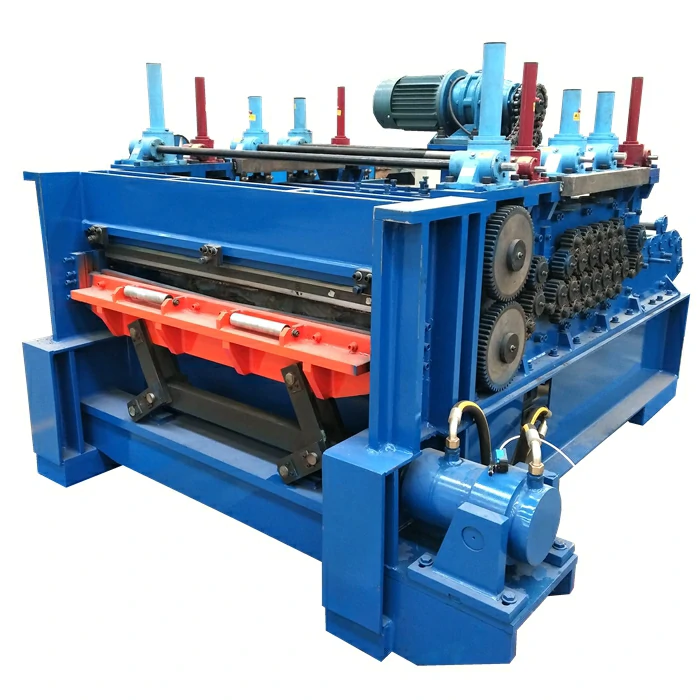
Portable Standing Seam Roof Panel Roll Forming Machine
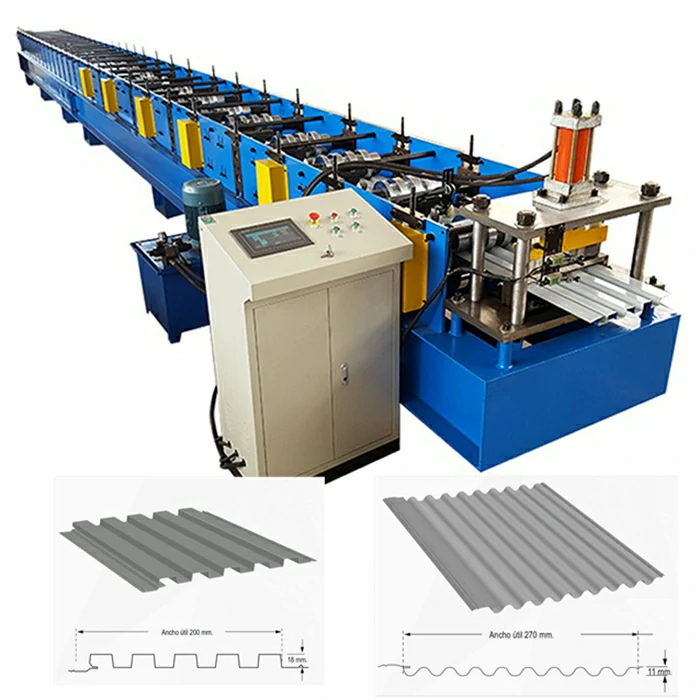
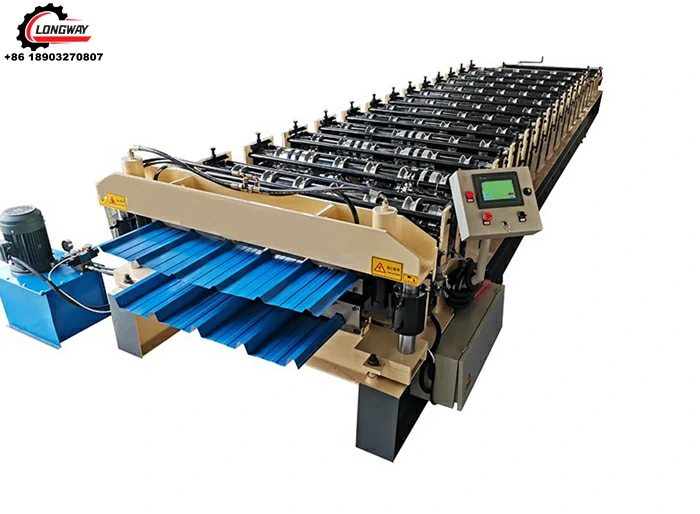
TR6 Trapezoidal Roof Panel Roll Forming Machine
A standing seam roof panel roll forming machine and a TR6 trapezoidal machine should be compared by the panel profile first, then by coil range, production speed, controls, and the space available for installation. The portable standing seam machine is aimed at on-site standing seam panel production, while the TR6 is configured for six-rib trapezoidal panels in a fixed industrial production setup.
Profile and working format
The portable standing seam roof panel roll forming machine forms standing seam panels and is described as a 3-meter-long portable roll former. Its portable format suits a roofing contractor or distributor that needs to form panels near the installation area and reduce the handling of long finished panels.
The TR6 forms six-rib trapezoidal panels, with custom profile size accepted. Its listed overall width is 1,000 to 1,250 mm, and its effective width is the TR6 standard profile. This makes it a suitable fit for a plant producing a defined trapezoidal panel profile for warehouse or commercial roofing orders.
Picture the two workflows clearly: the portable machine can be positioned close to a roof project, while the TR6 trapezoidal roof panel roll forming machine belongs in a production area with room for a 4,500 to 6,000 kg machine and its coil-handling equipment.
Material and production range
Both machines can process galvanized steel, Galvalume, and aluminum. Their thickness ranges overlap, but they are not identical:
| Criterion | Portable standing seam machine | TR6 trapezoidal machine |
|---|---|---|
| Material thickness | 0.4 to 1.0 mm | 0.3 to 1.2 mm |
| Material types | Galvanized steel, Galvalume, aluminum | Galvanized steel, Galvalume, aluminum |
| Production speed | 3 to 8 m/min | 15 to 25 m/min |
| Control system | PLC intelligent control | PLC integrated control |
| Drive system | Electric motor and gearbox | Chain transmission and gear drive |
The portable model covers a narrower thickness range and runs at a lower listed speed. That combination suits projects where panel length, site location, and transport handling matter. The TR6 covers a wider thickness range and has a higher listed speed, which suits a buyer planning regular production of trapezoidal panels.
Before ordering, match the coil gauges in your production plan to the machine range. For the portable option, also measure the access route and staging area around the 3-meter machine. For the TR6, plan space for the heavier machine, coil loading, and movement of finished six-rib panels.
Controls, power, and cutting
The two machines use PLC-based control systems. The portable standing seam machine is listed with semi-automatic or automatic operation and a PLC control system for length cutting. Its available power supply is listed as 3-phase 380 V, 220 V, or 415 V.
The TR6 uses an integrated PLC control system, hydraulic post-cutting, and a 3-phase 380 V, 50 Hz power requirement. These interfaces point to different installation checks. A buyer placing the portable machine at changing job sites should confirm which permitted supply matches the selected configuration. A TR6 buyer should confirm that the factory electrical service matches 380 V, 50 Hz before arranging installation.
Cutting also affects the production plan. The portable machine is described with length control, while the TR6 uses hydraulic post-cutting. Send the required panel lengths, coil specifications, electrical conditions, and profile drawings with the quotation request so the supplier can match the configuration to the order.
Maintenance and service access
The portable machine uses replaceable rollers, giving the operator a defined way to renew forming components as the machine is maintained. Its modular portable design also supports relocation between work areas.
The TR6 uses a modular design for roller replacement and lubrication of moving parts. Its forming rollers are made from heavy-duty alloy steel, and the frame is reinforced for forming pressure. For a factory buyer, the practical maintenance question is how the roller set, lubrication points, and replacement parts will be accessed during scheduled service.
Maintenance planning should follow the production setting. A mobile roofing team should include roller inspection and safe relocation in its site routine. A TR6 production line should reserve service access around the machine and include roller replacement and lubrication in the plant maintenance plan.
Which machine fits your purchase plan?
Choose the portable standing seam machine when your output is standing seam roofing and the work benefits from forming panels near the installation site. Its 3-meter portable format, standing seam profile, 0.4 to 1.0 mm thickness range, and 3 to 8 m/min speed align with a mobile production workflow.
Choose the TR6 when your orders call for six-rib trapezoidal panels and your operation is prepared for a fixed, heavier production machine. Its 1,000 to 1,250 mm overall width, 0.3 to 1.2 mm thickness range, 15 to 25 m/min speed, and hydraulic post-cutting fit a factory-oriented workflow.
For a quote, send the target profile drawing, material type and thickness, panel lengths and quantities, available voltage and frequency, and the planned installation space.
The people

About the author
The company
CANGZHOU LONGWAY INTERNATIONAL TRADE CO.,LTD
Cangzhou Longway International Trade Co., Ltd focus on cold roll forming machine and metal process machine. With 12 years' experience in R&D, production and marketing ,we have gained 70+ customers ,mainly from South America, North America and Europe . Our factory produce:Metal roofing machine, standing seam roof panel machine, stud and track forming machine, floor deck forming machine, steel frame roll forming machine, C Z purlin machine,slitting line, embossing machine etc .…
About Us ↗Visit company website ↗Your next step
Bring your brief. Start a useful conversation.
Use case, specification, quantity and delivery window: make the next conversation specific.
-
Ag Classic Rib Roof Roll Forming Machine FAQ: Integration, Spare Parts and MaintenanceNewsOct.31, 2026
-
Choosing 1mm Simple Steel Coil Cut to Length Machine: Working Requirements and Integration FitNewsOct.23, 2026
-
Deck Sheet Roll Forming Machine Supplier Guide: Choosing a Two Deck Machine for Micro Calamina OnduladaNewsOct.23, 2026
-
Choosing the 988 Machine from a Corrugated Roofing Sheet Forming Machine Manufacturer: Working Requirements and Integration FitNewsOct.23, 2026
-
Roof Panel Roll Forming Machine Price: What to Confirm Before Choosing the Tr6 Trapezoidal Roof Panel Roll Forming MachineNewsOct.23, 2026
-
Metal Roofing Roll Forming Machines for Sale Manufacturer Guide: Choosing the TR4 Roofing Panel MachineNewsOct.22, 2026
-
High Precision Cut to Length Machine for Metal ProductionNewsJul.01, 2026