

Professional Roll Forming Systems for Ethiopia
Supporting regional infrastructure and housing projects with high-performance steel processing equipment.

18 Corrugated Steel Roofing Sheet Making Machine

Euro 1100 Metal roof tile making machine
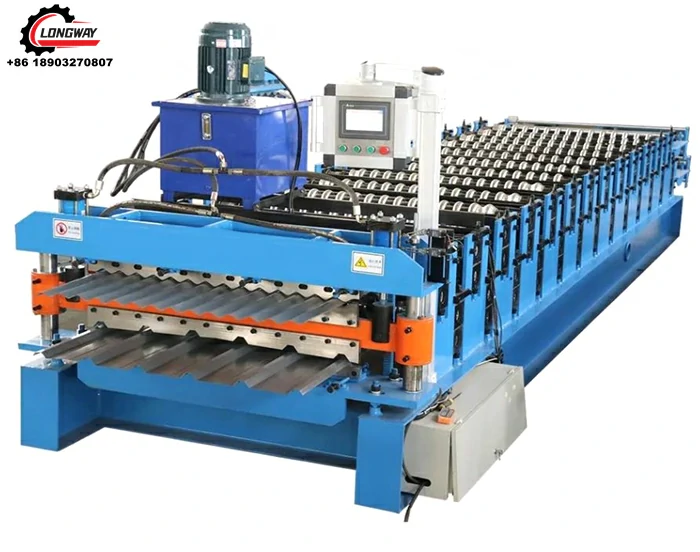
Double Layer Roll Forming Machine For Roofing Sheet
02 — REGIONAL ANALYSIS
Modernizing Construction in the Ethiopian Market
The transition from traditional building methods to rapid light-gauge steel framing.
Ethiopia is experiencing a significant shift in its urban infrastructure, with an increasing demand for rapid housing and industrial warehouse construction. This shift has created a critical need for reliable light steel roll forming machine systems that can produce consistent, high-strength profiles on-site or in centralized factories.
Local contractors are moving away from labor-intensive manual fabrication toward automated systems. The integration of a stud roll forming machine allows for the precise creation of wall frames and supports, significantly reducing material waste and accelerating project completion timelines in Addis Ababa and surrounding industrial zones.
For Ethiopian procurement managers, this means prioritizing equipment that balances high output with ease of maintenance. The ability to source a custom roll forming machine ensures that specific local architectural standards and material gauges are met without compromising structural integrity.
03 — EVOLUTION & TRENDS
The Progression of Metal Processing
From basic bending to fully automated profiling.
Initial Phase
Manual Fabrication
Heavy reliance on manual cutting and bending, leading to slow production speeds and high inconsistency in profile dimensions.
Growth Phase
Mechanized Adoption
Introduction of basic roll forming units to standardize studs and tracks, improving the speed of residential framing projects.
Modern Era
Automated Integration
Shift toward CNC-controlled systems for complex profiles, optimizing material usage and integrating with digital design workflows.
01
Modular Prefabrication
Increasing use of off-site manufacturing to reduce on-site labor costs and ensure strict quality control before assembly.
02
Material Optimization
Adoption of higher-tensile light steel to reduce the total weight of structures while maintaining load-bearing capacity.
03
Energy-Efficient Production
Preference for machines with optimized power consumption to lower operational costs in industrial parks.
04 — FUTURE OUTLOOK
Strategic Technical Advancements
Defining the next generation of steel forming.
01
Smart Control Systems
Integration of PLC interfaces for precise length control and automatic cutting for various profiles.
02
Enhanced Durability
Using hardened alloy rollers to extend the equipment lifespan under continuous high-volume production.
03
Rapid Reconfiguration
Designing systems that allow for faster changes between different stud and track specifications.
04
Digital Integration
Connecting production machines with architectural software for direct-to-fabrication workflows.
As the Ethiopian construction sector matures, the focus is shifting from basic capacity to operational precision. The adoption of sophisticated Stud and Track Roll Forming Machine technology allows developers to implement lean construction principles, reducing lead times for large-scale commercial complexes.
Project managers should evaluate machinery not just on initial cost, but on the total cost of ownership, including power efficiency and the availability of long-term technical support for specialized roll forming components.
05 — APPLICATION SCENARIOS
Industrial Use-Cases in Ethiopia
Real-world implementation of roll forming technology.
01
Urban Residential Partitioning
Using a drywall roll forming machine to produce standardized tracks for interior wall systems in high-rise apartments in Addis Ababa, ensuring rapid installation and acoustic performance.
02
Industrial Warehouse Framing
Deploying heavy-duty roll forming systems to create structural C and Z purlins for large-scale logistics hubs, providing the necessary strength for wide-span roofing.
03
Prefabricated Villa Development
Implementing light steel framing for rapid housing projects, where standardized stud profiles are produced in-factory and shipped to site for fast assembly.
04
Commercial Office Fit-outs
Utilizing precision roll forming for ceiling grids and partition supports in new corporate offices, focusing on tight tolerances and clean finishes.
05
Custom Engineering Projects
Designing bespoke profiles for specialized industrial equipment supports using custom roll forming capabilities to meet unique structural load requirements.
06 — CORPORATE PROFILE
Longway's Commitment to Excellence
Building reliability through engineering expertise.
Foundation Stage
Core Competency Development
Established a strong foundation in R&D and production for cold roll forming and metal processing machinery.
Market Expansion
Global Footprint Growth
Expanded market reach with 12 years of experience, serving over 70 customers across South America, North America, and Europe.
Service Evolution
Comprehensive Support Model
Developed a full-lifecycle service approach including machine design, production, installation, and lifetime after-sales support.
Complete Steel Processing Portfolio
From roofing and flooring to complex structural framing solutions.


08 — TECHNICAL FAQ
Common Inquiries for Roll Forming
Expert answers to procurement and technical questions.
What is the main advantage of using a stud roll forming machine over manual bending?
Automated systems ensure absolute dimensional consistency across thousands of pieces, eliminate human error in measurement, and significantly increase production speed, which is critical for large-scale construction timelines.
How can I determine the correct specifications for a custom roll forming machine for my project?
You should define the required profile geometry, the material gauge (thickness), the yield strength of the steel being used, and the desired production volume per hour. These factors dictate the roller design and motor power.
Are light steel roll forming machines suitable for residential housing in Ethiopia?
Yes, they are ideal for creating lightweight, termite-proof, and fire-resistant wall frames and roof trusses, which are increasingly preferred for modern residential developments in urban areas.
What maintenance is required for a drywall roll forming machine to ensure longevity?
Regular lubrication of the drive chains and gears, periodic inspection of roller wear, and ensuring the electrical panels are kept clean and dust-free are essential for maintaining precision and machine life.
What should I verify when choosing a supplier for Stud and Track Roll Forming Machine equipment?
Verify the supplier's experience in R&D, their ability to provide customized designs, the quality of the steel used for rollers, and their capacity to provide installation training and after-sales support.
Can these machines be integrated into a fully automated production line?
Yes, most modern roll forming units can be paired with automatic decoilers, flying shears, and stacking tables to create a continuous production flow from coil to finished profile.
Partner With Experts
Optimize Your Steel Production Today
Looking for high-precision roll forming solutions in Africa - Ethiopia? Our technical team is ready to help you select the right machinery for your industrial needs.
Discuss Your Requirements