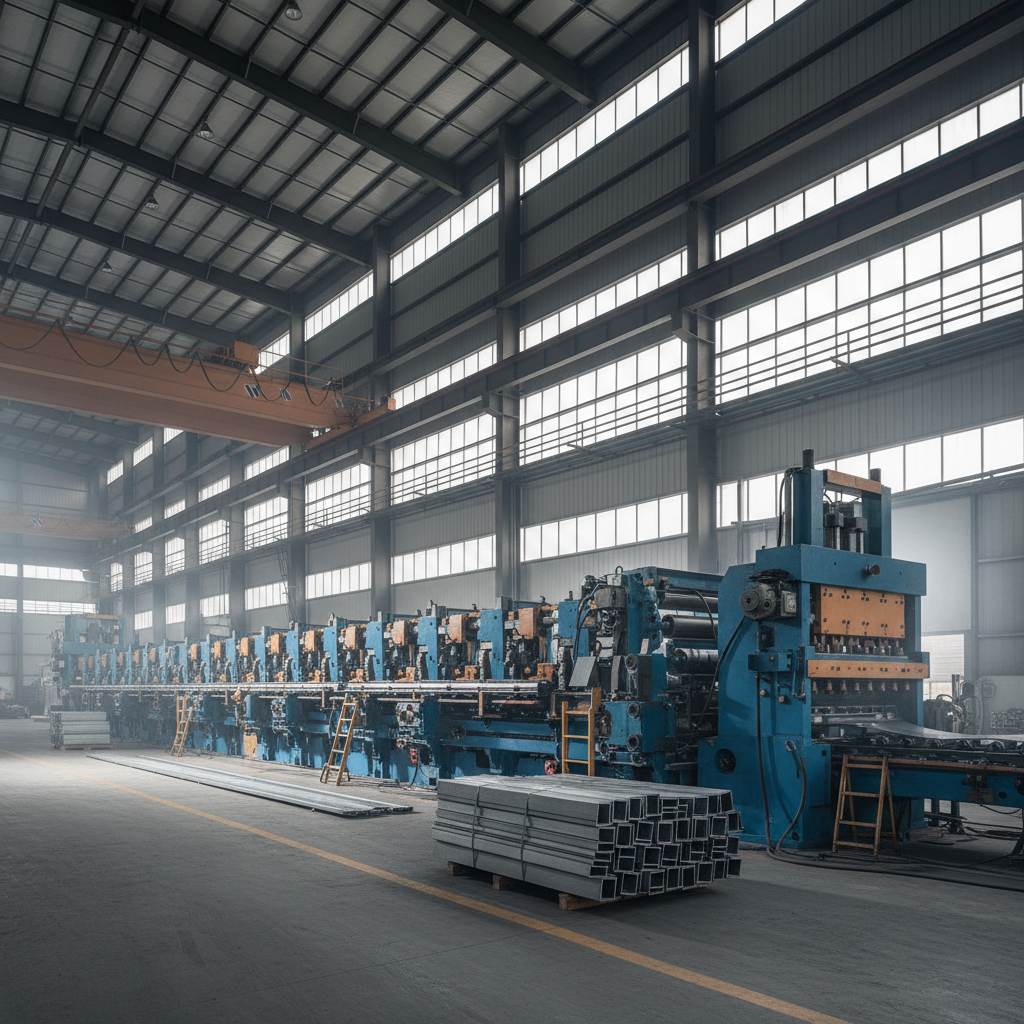
Capital expenditure for precision metal fabrication is currently undergoing a significant shift as manufacturers transition from manual bending to automated roll forming. For procurement managers, understanding the variables that influence the sheet metal forming machine price is critical to optimizing the balance between initial investment and long-term operational throughput.
The complexity of modern architectural profiles, such as trapezoidal roof panels, requires machines that can maintain tight tolerances across high speeds. The technical challenge lies in managing internal material stress during the forming process, which directly affects the structural integrity and final aesthetic of the panels.
This analysis examines the engineering drivers behind equipment costs and provides a technical framework for evaluating roll forming systems. For those seeking high-precision industrial solutions, reviewing specific configurations like the sheet metal forming machine price can reveal how material specifications and automation levels dictate the final budget.


A professional roll forming system operates through a sequential process of gradual bending. The material—typically PPGI, PPGL, or GI coils—is fed through a series of forming stations where rollers progressively shape the metal into a specific profile, such as the TR4 trapezoidal design.
The structural rigidity of the machine frame is paramount. Utilizing 350mm H-beam structures with 18mm welded steel ensures that the machine does not deflect under the immense pressure of the forming shafts, which is a critical factor when evaluating the quality and sheet metal forming machine price.
The cost of a forming system is heavily influenced by the grade of materials used in the rollers. High-grade 45# forged steel is often employed for the rollers to ensure wear resistance and longevity, especially when processing thicknesses ranging from 0.3mm to 0.6mm (30-22 Gauge).
Control system sophistication also plays a major role. The integration of PLC Delta and Inverter Delta systems allows for precise length-set cutting and synchronized speeds (typically 15-20m/min), reducing waste and increasing the overall ROI of the equipment.
Furthermore, the number of forming stations determines the precision of the final profile. A 20-row station configuration, for instance, allows for a more gradual transition of the metal, preventing surface cracking and ensuring the ribs—whether 4 or 6 in a TR-series panel—are perfectly uniform.
One of the most significant technical hurdles in roll forming is the accumulation of internal stress within the metal sheet. If the material is bent too aggressively or without proper relief, the final product may exhibit "spring-back" or twisting.
This engineering nuance is often a hidden differentiator in the sheet metal forming machine price. While basic machines may produce panels, high-end systems engineered for stress relief are essential for complex industrial buildings where curve-forming capability is required on the same panel.
When evaluating different machine tiers, engineers focus on the relationship between shaft diameter, roller material, and forming speed. A 75mm solid shaft with heat treatment provides the necessary torsion resistance to maintain profile accuracy during high-volume production.
The following assessment provides a normalized engineering rating of various configuration profiles based on their ability to handle high-duty cycles and maintain precision.
In representative engineering scenarios, these machines are deployed in specialized fabrication plants producing components for industrial warehouses and hotel exhibitions. The ability to produce trapezoidal panels with a 40mm wave height (specifically for the Peru TR4 standard) makes them highly versatile for regional construction requirements.
Typical workflows involve uncoiling the raw material, feeding it through the roll forming stations, and employing hydraulic pillar-type cutting for exact length specifications. For projects requiring arched roofs, the integration of a hydraulic curve machine alongside the roll former is a standard package solution.
The industry is moving toward "Smart Fabrication," where machines are not only automated but also capable of real-time data feedback. Integration with BIM (Building Information Modeling) allows for the automatic generation of cutting lists, which are fed directly into the PLC system.
We are also seeing a shift toward more sustainable material processing. New alloys and high-strength coatings require modified roller geometries to prevent surface abrasion, which will likely influence the future sheet metal forming machine price as specialized roller materials are developed.
The trend toward modular roll forming—where forming stations can be swapped to change profiles—is expected to grow, allowing smaller manufacturers to produce a wider variety of profiles, such as C and Z purlins, on a single base platform.
Selecting the right equipment requires a matrix-based approach, weighing the production volume against the required precision. A high-duty configuration is necessary for 24/7 operations, whereas a standard configuration suffices for custom architectural projects.
Buyers must evaluate the total cost of ownership, including energy consumption (such as the 5.5kw main motor power) and maintenance cycles for the forged steel rollers.
The table below provides a technical comparison of typical configuration profiles used in the industry to help determine the most suitable investment based on operational needs.
| Configuration Type | Material Grade | Precision Level | Primary Use Case |
|---|---|---|---|
| Basic Profile | Standard Steel | Standard | Small-scale rural construction |
| Standard Duty | 45# Forged Steel | High | Residential roofing projects |
| Precision Build | Heat-Treated Steel | Ultra-High | Architectural cladding |
| High-Duty Cycle | Reinforced Forged | High | Industrial warehouse production |
| Automated System | Premium Alloy | Ultra-High | Large-scale prefabricated plants |
| Custom Specification | Project-Specific | Variable | Specialized industrial profiles |
The primary drivers are the grade of roller material (e.g., 45# forged steel), the number of forming stations, and the level of automation in the control system. Additionally, the structural thickness of the machine frame and the precision of the hydraulic cutting system contribute to the overall cost, as higher stability reduces long-term maintenance and material waste.
Yes, professional TR-series machines are typically designed to handle a range of thicknesses, commonly from 0.3mm to 0.6mm (30-22 Gauge). However, the precision of the final profile may vary slightly depending on the coil's elasticity. It is essential to verify that the machine's forming shaft and roller pressure are calibrated for the specific gauge being processed.
Internal stress is managed through a "separate rolling" design concept. Instead of forcing the metal into shape rapidly, the profile is developed gradually across 20 or more forming stations. This allows the material to relax between bends, preventing the internal tension that causes panels to warp or twist upon exit from the machine.
Hydraulic pillar-type cutting provides a cleaner shear and allows for precise, programmable length adjustments via the PLC system. Mechanical cutting is often faster but lacks the same level of precision and can cause more deformation at the edges of the sheet, making hydraulic systems the preferred choice for high-end architectural panels.
Maintenance primarily involves regular lubrication of the bearings and inspection of the roller surfaces for wear or debris buildup. Since high-grade 45# forged steel is used, the rollers are highly durable, but periodic checks on the alignment of the 75mm solid shafts are necessary to ensure the profile remains within the specified tolerance.
If your project follows regional standards (like the Peru TR4 standard), a standard machine is more cost-effective and available faster. However, if your design requires unique wave heights or rib configurations, a customized machine is necessary. Customization involves redesigning the roller set and potentially adjusting the station count to ensure the metal is shaped without excessive stress.
The evaluation of a sheet metal forming machine price must extend beyond the initial purchase cost to include the engineering value of the system. The integration of separate rolling concepts, high-grade forged steel components, and robust H-beam structures directly correlates to the precision and longevity of the produced panels.
For industrial operators, the practical implication is clear: investing in a system that manages internal material stress and offers PLC-driven precision significantly reduces waste and enhances the structural quality of the final build. For those analyzing current market options, exploring the technical specifications of the sheet metal forming machine price provides a baseline for high-performance fabrication.