When budgeting for a new production line, determining the ibr making machine price involves more than just comparing a sticker price. The total cost of ownership is influenced by structural integrity, the precision of the forming rollers, and the automation level of the cutting system.
In the metal roofing industry, IBR (Inverted Box Rib) profiles are prized for their strength-to-weight ratio and efficient drainage. However, the variance in machine quality—from basic manual setups to high-precision PLC-controlled systems—creates a wide pricing spectrum that can confuse buyers who are not familiar with the technical drivers of cost.
To make an informed investment, it is essential to analyze how specific technical specifications, such as roller material and frame thickness, correlate with long-term operational costs and output quality.


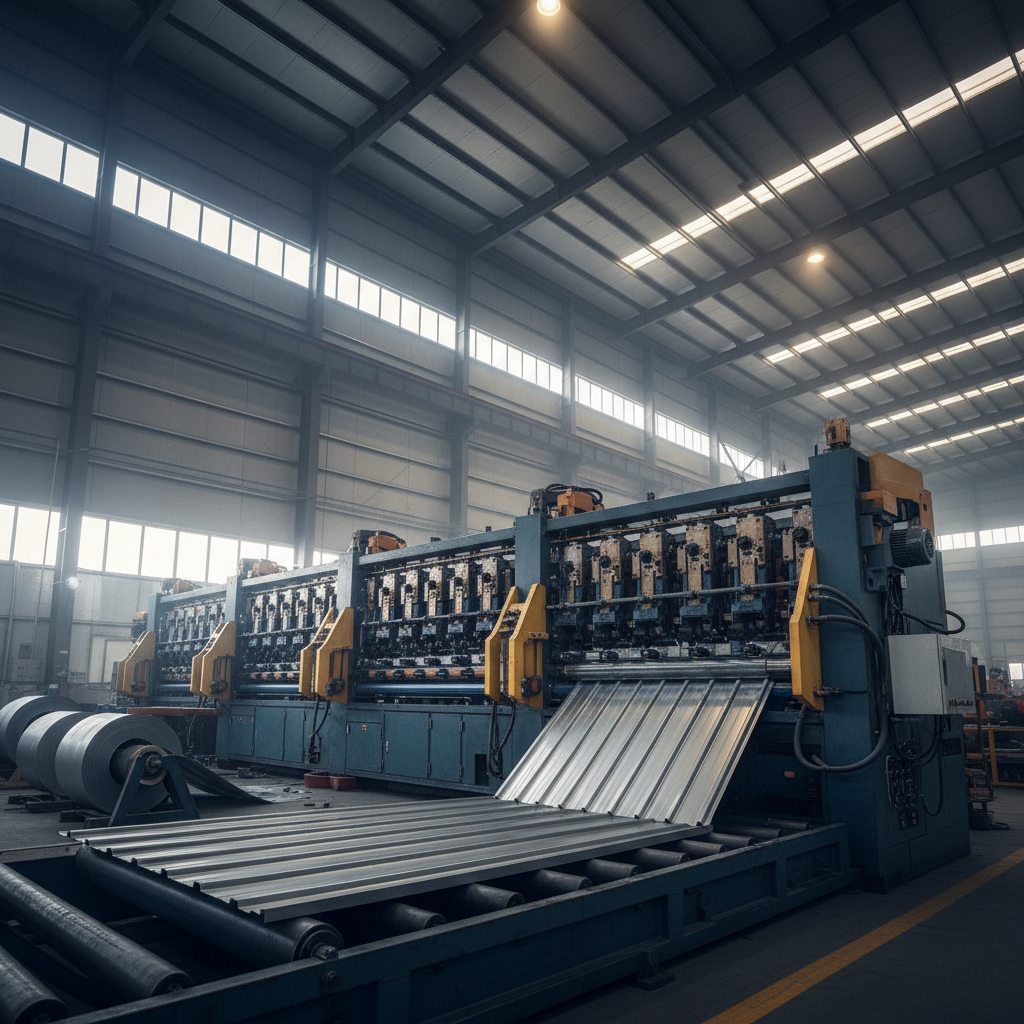
The geometry of the IBR or TR-series profile directly dictates the number of forming stations required. For instance, a TR4 panel with four ribs requires a specific sequence of bending and straightening stages to ensure the metal does not warp or develop internal stress.
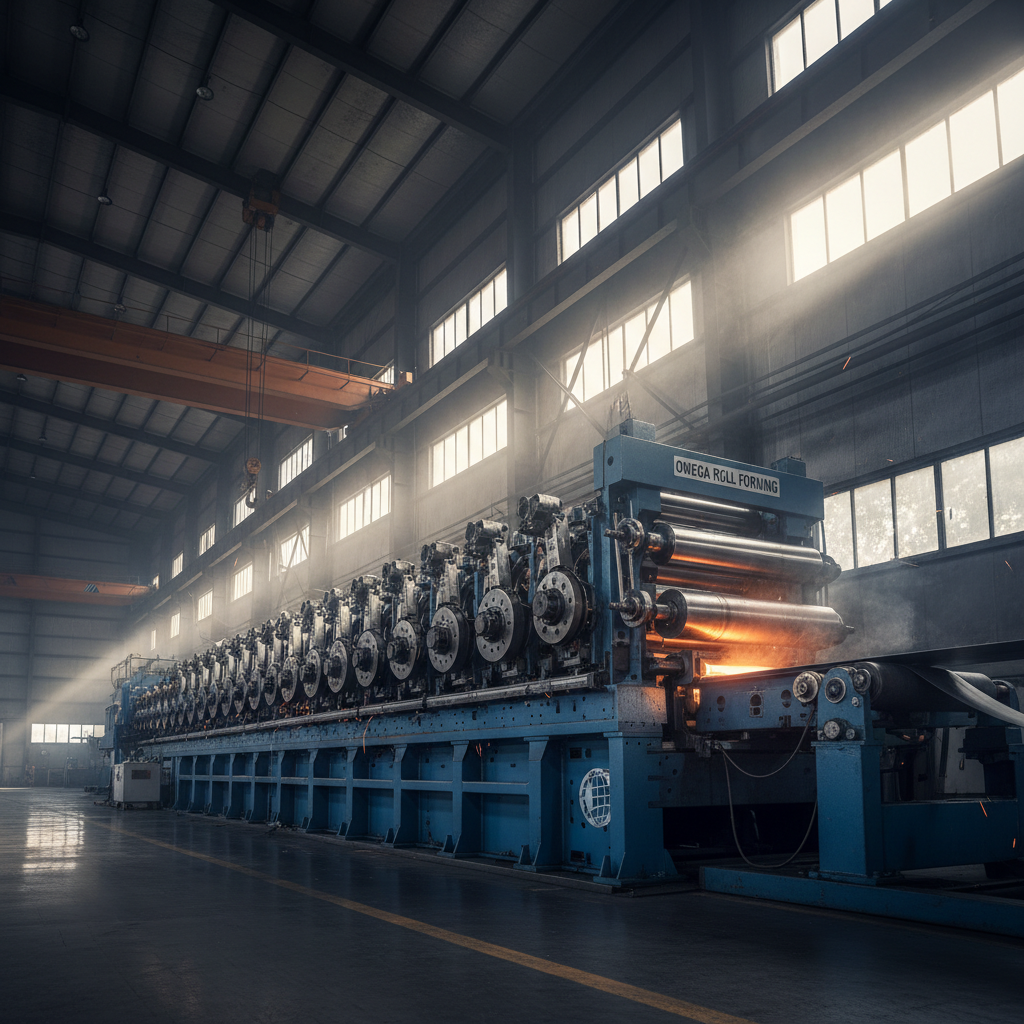
More complex profiles demand a higher number of roller stations—often reaching 20 rows—to achieve a smooth transition from flat coil to the final trapezoidal shape. This increase in hardware directly impacts the initial capital expenditure.
Material choice for critical components is where price disparities become most evident. High-grade 45# forged steel rollers, subjected to rigorous heat treatment, ensure that the rollers do not deform under the constant pressure of processing 0.3mm to 0.6mm gauge PPGI or GI coils. Lower-cost alternatives often use softer steels that wear down quickly, leading to profile inaccuracies.
The machine frame is another critical factor. A structure built from 350mm H-beam steel with an 18mm thickness provides the rigidity necessary to prevent vibration at speeds of 15-20m/min. A lightweight frame may be cheaper initially but often results in "sheet wander," which increases waste and reduces the precision of the final product.
Furthermore, the transmission system—such as the use of double 1-inch chain drives—determines the machine's duty cycle. Robust transmission prevents slippage and ensures that the torque is distributed evenly across all forming stations, which is vital for maintaining consistent rib heights across the entire length of the panel.
Achieving high speed without sacrificing quality requires a "separate rolling" design concept. This approach allows the internal stresses of the metal sheet to be released gradually as it moves through the stations, preventing the common issue of edge waving or twisting.
The true value of a roll forming machine is not found in its maximum speed, but in its ability to maintain dimensional tolerance at that speed over thousands of cycles.
For those producing TR4 panels for industrial buildings, the ability to integrate a hydraulic curving machine is a significant value-add. This allows a single production line to handle both standard flat roofs and curved architectural designs, expanding the market reach for the manufacturer.
The control system is the "brain" of the operation and a major variable in the ibr making machine price. Basic machines use simple mechanical counters, whereas professional-grade systems utilize PLC Delta controllers and touch screens.
PLC systems enable precise length-set cutting and automatic synchronization between the feeding motor and the hydraulic cutter. This reduces human error and significantly lowers the cost per linear meter by minimizing scrap material during the startup and shutdown phases.
A typical industrial setting requires a machine that can handle various raw materials, such as PPGI and PPGL coils up to 1220mm in width. In this scenario, the priority is not just the forming speed but the versatility of the machine to handle different gauges (from 30 to 22 gauge) without requiring frequent roller adjustments.
For manufacturers focusing on high-end residential or hotel projects, the aesthetic quality of the TR4 panel—characterized by its classical appearance—is paramount. This requires a machine with highly polished rollers to ensure that the coated surface of the coil is not scratched during the roll forming process, which would otherwise lead to expensive product rejects.
The industry is shifting toward more integrated "package solutions." Rather than purchasing a stand-alone roll former, operators are increasingly investing in lines that include uncoilers, automated feeding systems, and integrated hydraulic cutting tables.
This evolution is driven by the need for leaner production. By automating the workflow from uncoiling to the receiving table, manufacturers can reduce labor costs and increase throughput. The integration of inverter-driven motors also allows for softer starts and stops, extending the lifespan of the mechanical components.
Looking ahead, the demand for customized profiles is growing. The ability of a manufacturer to customize a machine according to a specific profile drawing—such as the Peru TR4 standard with a 40mm wave height—is becoming a key competitive advantage.
When comparing different quotes for an IBR system, the "cheapest" option often carries the highest long-term risk. A failure in a single roller shaft or a misalignment in the H-beam frame can lead to weeks of downtime and thousands of dollars in wasted material.
A professional evaluation should focus on the "cost-per-ton" of usable output. A machine with a higher initial price but lower scrap rates and a longer warranty period typically offers a better Return on Investment (ROI) within the first 24 months of operation.
The following framework outlines the critical trade-offs between entry-level and professional-grade forming equipment to help buyers align their budget with their production goals.
| Evaluation Factor | Entry-Level System | Professional System | Operational Impact |
|---|---|---|---|
| Roller Material | Standard Carbon Steel | 45# Forged Steel (Heat Treated) | Wear rate & Profile precision |
| Frame Structure | Light-gauge Plate | 350mm H-Beam (18mm Thick) | Vibration & Stability |
| Control System | Manual/Mechanical | PLC Delta + Touch Screen | Cutting accuracy & Labor cost |
| Rolling Design | Single-stage Bend | Separate Rolling Concept | Internal stress & Sheet flatness |
| Drive System | Single Chain | Double 1-inch Chain Drive | Torque consistency & Lifespan |
| Warranty/Support | Limited/Parts only | 2 Year Warranty + Lifetime Service | Downtime risk mitigation |
The price is primarily driven by the quality of the forming rollers (material and heat treatment), the rigidity of the machine frame (H-beam thickness), the level of automation (PLC vs. manual), and the number of forming stations. High-precision machines use forged steel and robust structural beams to ensure long-term accuracy, which increases the initial cost but lowers the cost of waste and maintenance.
Standard machines are built for a specific profile drawing, such as the TR4 standard with a 40mm wave height. However, professional manufacturers offer customization services. While you cannot change the rib height of an existing set of rollers, you can order a machine customized to your specific profile requirements or purchase interchangeable roller sets if the machine design supports it.
Separate rolling distributes the bending process over more stages, which prevents the metal from developing internal tension. This is crucial for preventing "oil canning" or warping in the finished panel. By releasing stress gradually, the resulting IBR or TR4 sheets are flatter, more precise, and easier to install on industrial building frames.
While a manual system can function for very low volumes, a PLC system is highly recommended even for small scales. It ensures consistent length cutting, which eliminates the need for manual trimming and reduces material waste. Given that raw material (PPGI/GI) is a recurring cost, the efficiency gained from a PLC often pays for the price difference quickly.
These machines are designed for cold-rolled steel coils, specifically PPGI (Pre-Painted Galvanized Iron), PPGL (Pre-Painted Galvalume), and GI (Galvanized Iron). The typical width is 1220mm, with thickness ranges from 0.3mm to 0.6mm (30-22 Gauge). Using materials outside these specifications may require adjusted roller pressure or customized roller diameters.
Regular lubrication of the chain drives and bearings is essential to prevent wear. Additionally, rollers should be inspected for debris or coating buildup, which can cause scratches on the panels. Checking the alignment of the hydraulic cutter and the tension of the double chain drive every few months ensures the machine continues to operate at its rated speed of 15-20m/min without vibration.
Evaluating an ibr making machine price requires a shift in focus from the initial purchase cost to the long-term production efficiency. The combination of a rigid H-beam frame, heat-treated forged steel rollers, and a reliable PLC control system creates a foundation for high-precision output and minimal operational downtime.
For businesses aiming to scale their roofing production, investing in professional-grade equipment—supported by a comprehensive warranty and lifetime after-sales service—is the most reliable path to maintaining quality standards and achieving a sustainable return on investment.