0%

Table of Contents

Look, custom roll forming machine – it's not exactly glamorous, is it? But honestly, it’s the backbone of so much these days. You walk into any modern building, any vehicle assembly line, even some of those fancy shipping containers… a custom roll forming machine likely had a hand in it. Used to be, everyone was chasing fancy 3D printing, additive manufacturing, all that jazz. Still cool stuff, don’t get me wrong. But right now? Efficiency, speed, and frankly, cost-effectiveness are king. Everyone's looking for ways to streamline production, and custom roll forming is really hitting that sweet spot. The demand is definitely climbing, especially with the push for more localized manufacturing.

I've been on sites where they're trying to force a solution that looks good on paper, but just doesn’t translate to real-world conditions. It's a common story. They spend all this time on design, running simulations… and then you get out on the factory floor, and it’s just not practical. You’ve got to think about things like material handling, ease of assembly, even just where the operator is going to stand.

And it's not all just about the machine itself. It’s the whole ecosystem around it. The tooling, the software, the expertise of the guys running it… all crucial.
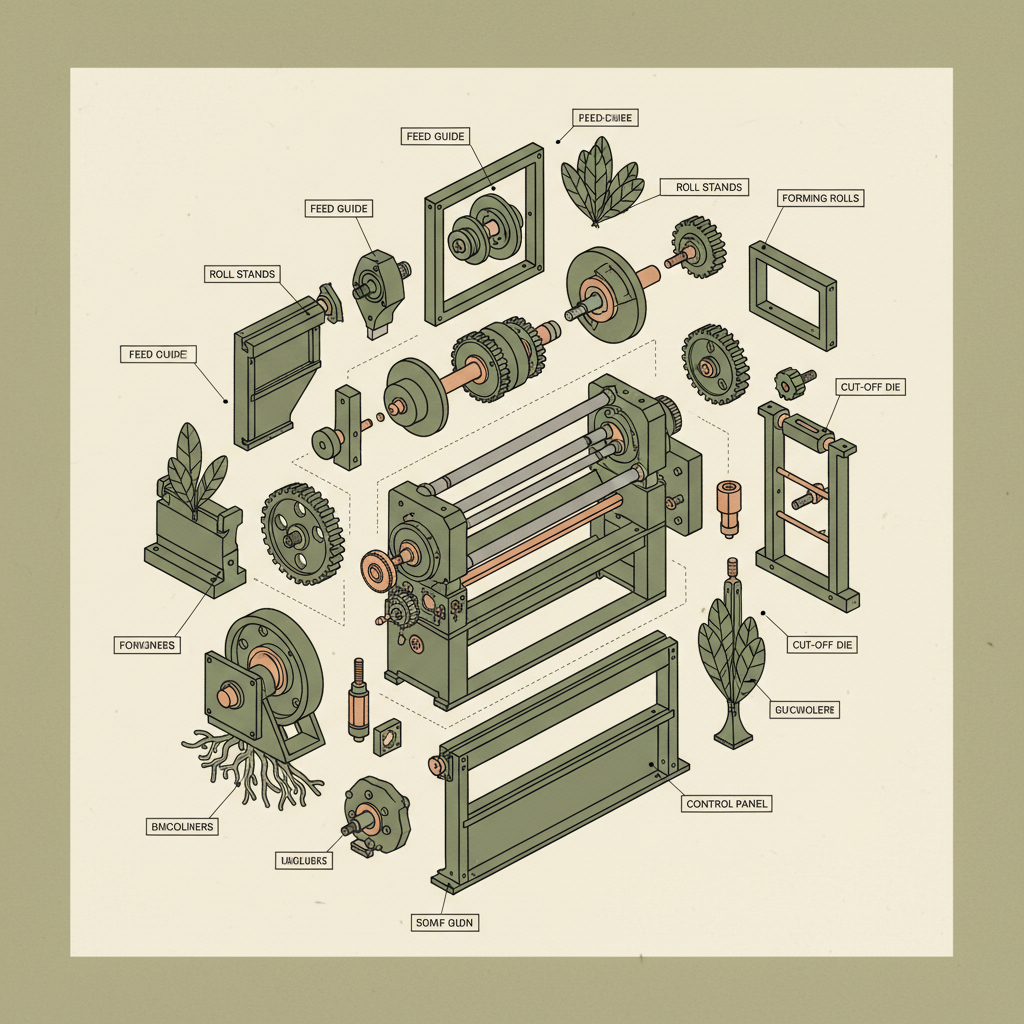
Exploring the Efficiency of Custom Roll Forming Machine Solutions

What's Trending and Common Pitfalls

Exploring the Efficiency of Custom Roll Forming Machine Solutions

To be honest, the biggest trend I’m seeing is the demand for higher precision and tighter tolerances. Everyone wants thinner walls, more complex profiles… it's pushing the limits of what’s possible. And that’s where you get into trouble. People try to squeeze too much out of the machine, too much out of the material, and end up with a system that’s just not reliable. Have you noticed how often people underestimate the importance of proper material selection? It's crucial.

The biggest pitfall? Trying to overcomplicate things. A lot of engineers like to show off, right? "Look at this intricate design!" But sometimes the simplest solution is the best. I encountered this at a fastener factory last time - they were trying to use a custom roll forming machine to create this ridiculously complex fastener head, and it was just a nightmare. Bent parts, broken tooling, constant adjustments… it was a mess. They ended up going back to a simpler design and saved themselves a ton of headaches.

Materials: The Real Feel of Roll Forming

Okay, let’s talk materials. Steel’s obviously the workhorse. But it's not just "steel". You've got your mild steel, your high-strength steel, your galvanized steel… and they all behave differently under the rollers. Galvanized steel, for example – you gotta be careful with the zinc coating. It can wear down the tooling faster. And stainless steel… that stuff is tough. Requires a lot more power, and the tooling needs to be spot-on.

Aluminum's becoming more popular, especially for lightweight applications. It smells kinda…metallic and clean when you cut it, if that makes sense. It’s softer than steel, which makes it easier to form, but it’s also more prone to scratching.

And don't forget about the surface finish! If you need a painted or coated part, the material prep is critical. Rust, scale, grease… all that stuff has to be removed before you start rolling. Otherwise, you'll end up with a finish that looks terrible and won’t last.

Testing Beyond the Lab

Lab testing is fine, don’t get me wrong. But it doesn't tell you everything. Strangel,y enough, the real test is always what happens on the production line. We do bend tests, tensile tests, corrosion resistance tests… the usual stuff. But the real test is can the machine run 24/7 for a week without breaking down? Can the operators easily adjust it when they need to?

I remember one time, we had a client who insisted on a super-tight bend radius. It looked great in the lab, but on the factory floor, it caused constant jamming and tooling failures. We had to loosen up the radius slightly, and suddenly everything ran smoothly.

We've also started doing more simulated fatigue testing. Basically, we run the machine at full speed for a long time, and then we inspect the parts for cracks or wear. It’s a good way to identify potential problems before they happen.

How Users Actually Use It

This is where things get interesting. You design a machine thinking users will follow your instructions, right? Wrong. They’ll find ways to do things you never even considered. I once saw a guy using a custom roll forming machine to make… garden edging. Garden edging! Not what we designed it for, but hey, it worked.

I’ve also seen operators bypass safety features, ignore warnings, and generally push the machine to its limits. It's frustrating, but it's also a good reminder that you need to design for human error. Make things as foolproof as possible.

Roll Forming Machine Performance Metrics


Advantages, Disadvantages, and Real Talk

The advantages are pretty clear: speed, cost-effectiveness, repeatability. You can crank out a huge volume of parts quickly and consistently. Anyway, I think that’s the biggest draw. But there are downsides. Setting up a custom roll forming line can be expensive. The tooling costs can add up quickly. And it's not as flexible as some other manufacturing processes. If you need to change the design of a part, you may need to replace the entire tooling setup.

The biggest challenge is finding skilled operators. It's not just about pushing a button. You need someone who understands the process, can troubleshoot problems, and can make adjustments on the fly. That’s where a lot of companies struggle.

Customization in Action

Customization is where these machines really shine. We had a client, a manufacturer of solar panel frames, who needed a specific profile that wasn't available off-the-shelf. We designed a custom roll forming line specifically for their application. It involved some tricky bends and tight tolerances, but we got it done.

Another example: a company that makes metal furniture. They wanted to create a unique decorative trim for their chairs. We designed a custom roll forming die that produced the exact profile they needed, allowing them to differentiate their product from the competition.

A Customer Story: The Debacle

Last month, that small boss in Shenzhen who makes smart home devices – real hustler, always pushing the envelope – insisted on changing the enclosure interface to . Said it looked “more modern.” We warned him, honestly, that switching to a different profile, even a seemingly small one, would require a completely new set of tooling. He didn’t listen.

He wanted it yesterday, of course. We rushed the tooling, got it installed, and started production. And wouldn’t you know it? The new profile didn’t quite line up with the internal components. He ended up having to redesign the whole circuit board! Cost him a fortune, delayed his product launch by weeks.

He eventually came around, apologized for not listening. Lesson learned, I guess. Sometimes, sticking with what works is the best option.

Roll Forming Machine Performance Comparison

Machine Type Material Compatibility Production Speed (m/min) Maintenance Complexity
Standard Roll Forming Steel, Aluminum 15-25 Low
Progressive Roll Forming Steel, Stainless Steel 10-20 Medium
Push-Bending Roll Forming Steel, Galvanized Steel 20-30 Medium-High
Draw-Bending Roll Forming Aluminum, Copper 8-15 High
Combination Roll Forming Wide Range 12-28 Medium
High-Speed Roll Forming Steel, Lightweight Alloys 30-45 High

FAQS

What are the typical lead times for a custom roll forming line?

Lead times can vary significantly depending on the complexity of the tooling and the machine itself. Generally, you're looking at 8-16 weeks from design approval to delivery. It’s longer if you need specialized components or if the project is particularly challenging. The biggest bottleneck is usually the tooling fabrication – getting those dies made precisely takes time and expertise. We try to be upfront about timelines from the get-go, because surprises are never fun.

What level of maintenance is required for these machines?

Honestly, it's not insignificant. Regular lubrication of the rollers is crucial. You need to inspect the tooling for wear and tear, replace worn parts as needed, and keep everything clean. Preventative maintenance is key. If you let things go, you'll end up with breakdowns and costly repairs. We offer maintenance packages, and I strongly recommend them. It’ll save you money in the long run.

Can a custom roll forming machine handle different material thicknesses?

It depends on the machine and the tooling. Some machines are designed for a specific material thickness, while others can be adjusted to handle a range of thicknesses. It’s not just about the machine, though. You also need to consider the material properties and the desired profile. Thicker materials require more power and more robust tooling. We always perform a feasibility study to determine if a machine can handle your specific application.

What’s the typical return on investment (ROI) for a custom roll forming line?

ROI varies wildly based on production volume, material costs, and labor rates. But generally, you can expect to see a return within 2-5 years. The real benefit comes from the increased efficiency and reduced labor costs. You're able to produce parts much faster and with less manual intervention. Plus, the consistency of the parts reduces scrap and rework. We can help you calculate a detailed ROI based on your specific needs.

What are the safety considerations when operating a roll forming machine?

Safety is paramount. These machines have moving parts that can cause serious injury. Proper guarding is essential. Operators should always wear appropriate personal protective equipment (PPE), including safety glasses, gloves, and hearing protection. Training is also crucial. Operators need to understand the machine’s operation, safety procedures, and emergency shutdown procedures. Don't bypass safety features – it's just not worth the risk.

What’s the difference between in-line and offline roll forming?

In-line roll forming integrates the roll forming process directly into a larger production line, often with automated material handling and downstream operations like cutting, punching, or welding. Offline roll forming is a standalone process where parts are formed and then processed separately. In-line is more efficient for high-volume production, while offline is more flexible for smaller batches or custom orders. The choice depends on your specific needs and production requirements.

Conclusion

So, to wrap it up, custom roll forming machine isn’t about fancy technology or complex algorithms. It’s about taking a fundamental process and optimizing it for efficiency, precision, and cost-effectiveness. It’s about understanding the materials, the machines, and the people who operate them. And it's about being realistic – recognizing the limitations and designing solutions that work in the real world, not just on paper.

Look, at the end of the day, whether this thing works or not, the worker will know the moment he tightens the screw. That’s the ultimate test. If it feels right, looks right, and performs right, then we’ve done our job. And if you’re looking for a custom roll forming solution, get in touch. We'll walk you through the whole process, from design to installation to ongoing support. Visit our website: www.lwrollformingmachine.com

William Davis

William Davis

William Davis is a dedicated After-Sales Service Engineer at Cangzhou Longway International Trade. He provides technical support and installation assistance to customers primarily in Europe. William is proficient in diagnosing and resolving mechanical and electrical issues remotely, and is available for on-site support when required. He is known for his
Previous Understanding Light Steel Roll Forming Machine Technology and Industry Trends
Next Optimizing Stud Roll Forming Machine Performance and Design Considerations