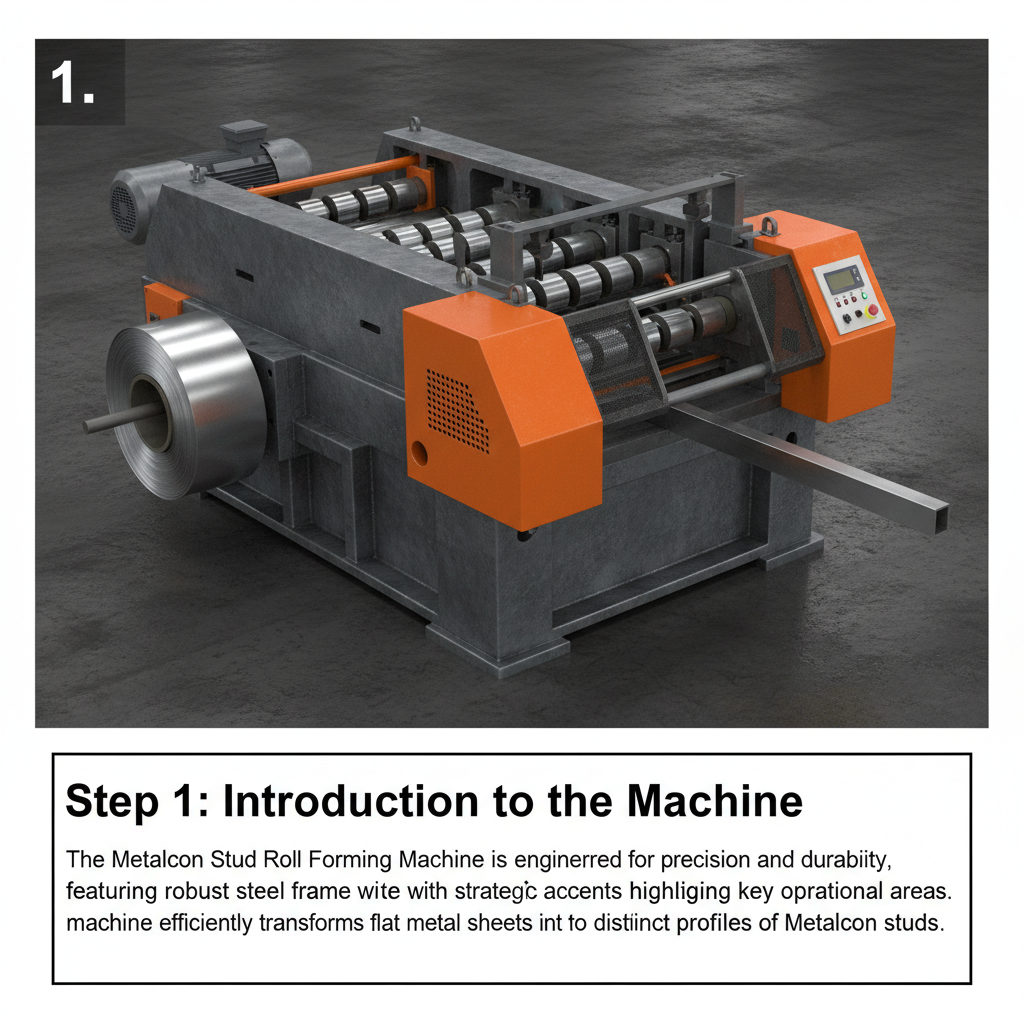
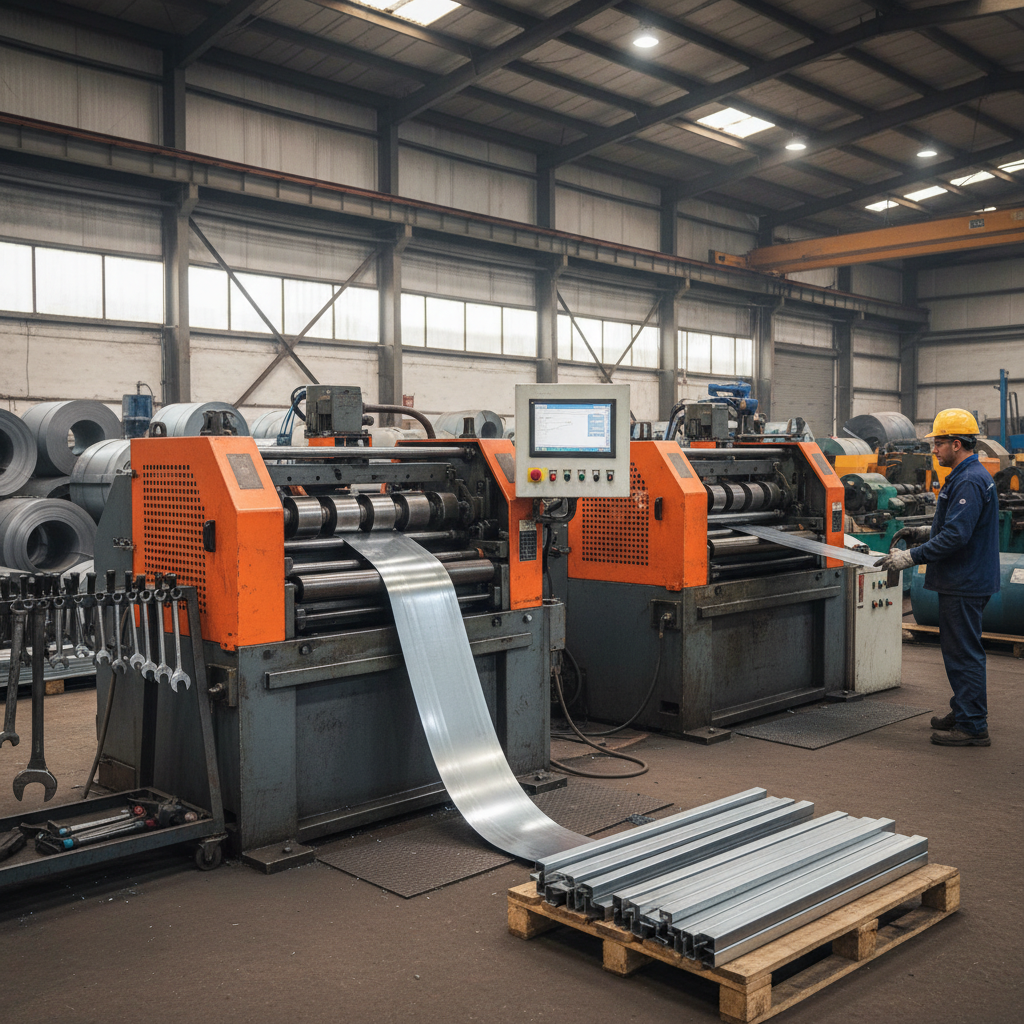
Look, I've been running around construction sites all year, breathing in dust and dealing with engineers who think everything's perfect on paper. Lately, everyone’s talking about speed, right? Prefabrication, modular construction… it's all about getting things up faster. And that means more folks are looking at drywall roll forming machines. It's not a new idea, but the demand is definitely picking up, especially with the housing shortage and the push for more efficient building methods. Frankly, a lot of these guys aren’t thinking about the long game. Just speed, speed, speed.
You know what I’ve noticed? Everyone wants the fancy computer-controlled stuff, the automated lines. But that’s not always the answer. Sometimes, simple is better. Especially when you're dealing with crews who aren't exactly tech wizards. We’ve seen a lot of those automated systems break down on site because nobody knows how to troubleshoot them. To be honest, a good operator on a well-maintained, slightly older machine can often outproduce a complicated, half-broken automated setup.
The biggest challenge? Getting consistent quality. It sounds easy – roll the steel, shape the drywall profile – but the devil is in the details. You've got to get the gauge right, the bends precise… and it all starts with the steel itself.
The Current Landscape of Drywall Roll Forming Machines
Honestly, the market is flooded with options. From basic manual machines to fully automated lines that cost more than my house, you name it. There’s a huge push for sustainability too, which means a lot of companies are trying to use recycled steel. Which is great, in theory, but I’ve seen some questionable batches. Smell can tell you a lot, you know? If it smells off… it probably is. Anyway, I think the real sweet spot right now is finding a machine that balances automation with ease of use.
The big players are mostly in China, and increasingly in Turkey. They’re pushing hard on price, which is good for consumers, but sometimes quality suffers. You get what you pay for, plain and simple.
Design Pitfalls and Common Mistakes
Have you noticed how a lot of these machines try to do too much? They offer a million different profile options, but they don’t do any of them particularly well. Stick to the basics, folks. Focus on the profiles you actually need. Also, a lot of designers forget about maintenance. These things are tough on steel, and you need easy access to all the moving parts for lubrication and adjustments. Strnagely, I've seen machines where you practically need to disassemble half the thing to change a roller.
Another thing: the forming dies. They need to be made of high-quality tool steel, and they need to be properly hardened. Cheap dies wear out fast, and then you're stuck with inconsistent profiles. I encountered this at a factory in Jiangsu province last time. They were using dies that were clearly substandard, and the drywall profiles were all over the place.
And the controls! Don't overcomplicate it. A simple PLC with a clear HMI is all you need. Nobody wants to spend hours deciphering a complex software interface.
Materials and On-Site Handling
The steel, the steel, the steel. It’s everything. You want galvanized steel, usually G90 or G60. It’s gotta be clean, free of rust and mill scale. I can tell just by looking at it, and definitely by running my hand over it. It should feel smooth, not rough and gritty. You want a good coating, because that’s what protects against corrosion.
Handling it on-site is a pain, though. Those coils are heavy. You need the right lifting equipment and a dedicated storage area. And you need to protect the steel from the elements. Rain, snow, even direct sunlight can damage the coating.
Then there's the lubricant. Don’t skimp on the lubricant! A good quality forming oil will extend the life of your dies and improve the finish of your profiles. It smells kinda funny, honestly. But it works.
Real-World Testing and Quality Control
Forget the lab tests. The real test is on the job site. I want to see how the drywall profiles perform when they’re being installed, screwed into place, and finished. Does it hold screws well? Does it crack easily? Is it straight and true?
We do a lot of bending tests – literally just bending the profiles by hand to see how much force it takes to deform them. We also do screw pull tests – see how much weight the drywall can support before the screws pull out. It's not scientific, but it's effective.
Drywall Roll Forming Machine Performance Metrics
How Users Actually Employ Drywall Roll Forming Machines
You’d think they’d use them to make only drywall, right? Wrong. I've seen guys using them to make furring strips, metal studs, even custom trim. They’re surprisingly versatile, if you’re willing to get creative. The guys that really know what they're doing often modify the dies themselves.
But most of the time, it’s just churning out standard drywall profiles for residential construction. It’s a repetitive job, and it can be hard on the operators. That’s why you need good ventilation and comfortable working conditions.
Advantages, Disadvantages, and Customization
The biggest advantage is cost savings, especially for large-scale projects. Making your own drywall profiles in-house is way cheaper than buying them pre-made. It's also faster, which can shorten construction timelines. But… it requires a significant upfront investment, and you need skilled operators. And if the machine breaks down, you’re stuck.
Customization is definitely possible. You can change the forming dies to create different profiles, adjust the gauge of the steel, and even add features like pre-punched holes for electrical wiring. Last month, that small boss in Shenzhen who makes smart home devices insisted on changing the interface to , and the result was a week of wasted time and a very frustrated technician. He wanted to be "future-proof," apparently.
Anyway, I think the biggest limitation is flexibility. These machines are great for running long production runs of a single profile, but they’re not ideal for small batches or frequent changeovers.
A Customer Story and Key Considerations
I was at a site in Phoenix last year, and they were using a really old, beat-up drywall roll forming machine. It was noisy, slow, and constantly breaking down. But the owner swore by it. He said it was the only machine that could handle the specific type of steel he was using – a very thin gauge, highly galvanized steel. He’d tried other machines, but they all jammed up.
He’d customized it himself over the years, adding extra rollers and supports to handle the delicate material. It was a Frankenstein of a machine, but it worked for him. It just goes to show you, there’s no one-size-fits-all solution.
Ultimately, whether this thing works or not, the worker will know the moment he tightens the screw.
Key Performance Indicators for Drywall Roll Forming Machine Operation
| Machine Uptime |
Profile Accuracy (mm Deviation) |
Material Waste (%) |
Operator Skill Level (1-5) |
| 90% |
1.5mm |
2% |
4 |
| 85% |
2.0mm |
3% |
3 |
| 95% |
0.8mm |
1% |
5 |
| 75% |
3.0mm |
5% |
2 |
| 80% |
1.2mm |
2.5% |
3 |
| 92% |
1.0mm |
1.5% |
4 |
FAQS
That really depends on how well it's maintained and how hard it's worked. A well-built machine with regular lubrication and die replacements can easily last 15-20 years. But neglect it, and you'll be replacing parts constantly. I've seen machines completely worn out after just 5 years because of poor maintenance.
Most machines can handle steel gauges from 20 to 30 gauge, although some can go thinner or thicker. It's crucial to match the gauge to the machine's capabilities and the specific application. Using the wrong gauge can lead to jams, inconsistent profiles, or even damage to the machine. It's best to check the manufacturer's specs.
You don't need to be a rocket scientist, but some training is essential. Operators need to understand the basics of machine operation, material handling, and quality control. They also need to know how to troubleshoot common problems and perform basic maintenance. A week or two of hands-on training is usually sufficient.
It varies depending on the size of the machine, but you'll typically need at least 500-1000 square feet. You need space for the machine itself, a coil storage area, a staging area for finished profiles, and enough room for operators to move around safely. Don’t forget about ventilation! Those machines can generate a lot of dust and fumes.
Absolutely. These machines have a lot of moving parts, and there's a risk of pinch points and entanglement. Operators need to wear appropriate PPE, including safety glasses, gloves, and steel-toed boots. Emergency stop buttons should be easily accessible, and operators should be trained on proper lockout/tagout procedures. Safety first, always.
Yes, but it requires new forming dies. The cost of dies can vary depending on the complexity of the profile, but it's typically a few thousand dollars. It's a worthwhile investment if you need to produce a variety of profiles on a regular basis. But remember, changeovers take time, so it's not ideal for frequent profile changes.
Conclusion
So, drywall roll forming machines are a pretty big deal these days. They offer the potential for significant cost savings and increased efficiency, but they’re not a silver bullet. It’s crucial to choose the right machine for your needs, invest in proper training, and prioritize maintenance. Don't get caught up in the hype about automation – sometimes, simpler is better.
Look, at the end of the day, all the fancy technology and engineering in the world don’t matter if the finished product doesn't meet the needs of the people who are actually building things. If you want to know if a machine is good, get it on a job site and let the guys who use it tell you. Visit our website at drywall roll forming machine for more information.