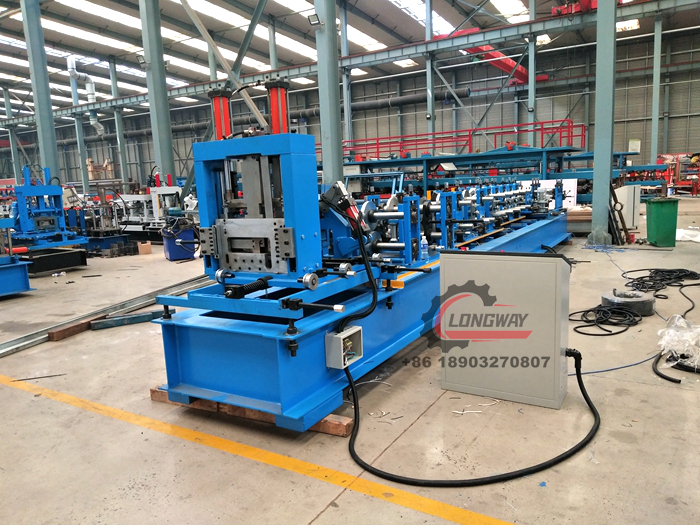
Industrial Corrugated Roof Sheet Making Machine Price and Guide
Selecting a high-performance production line for trapezoidal panels requires a deep understanding of both mechanical precision and material compatibility. The TR4, TR5, and TR6 series of metal roofing roll forming machines are engineered specifically to produce durable roofing sheets with 4 to 6 ribs, providing the structural rigidity necessary for industrial and residential infrastructure. For operators focusing on industrial buildings, the TR4 profile is particularly advantageous as it supports the creation of curved panels, allowing for more complex architectural designs without compromising material integrity.
When evaluating the investment for such equipment, buyers must look beyond the initial corrugated roof sheet making machine price and consider the long-term operational efficiency, the quality of the forming rollers, and the reliability of the control systems. A well-constructed machine reduces material waste and ensures that every sheet meets strict dimensional tolerances, which is critical for seamless installation on-site. By integrating hydraulic cutting and PLC automation, these systems streamline the transition from raw coil to finished architectural component.

Technical Engineering of TR Series Trapezoidal Roll Forming Systems
The TR series machinery utilizes a sophisticated separate rolling design concept. Unlike integrated rolling, this approach is specifically engineered to release internal stresses from the metal sheets during the forming process. The result is a panel that maintains high precision and a stable shape, preventing the "spring-back" effect often seen in lower-quality equipment. The core of the machine consists of 20 rows of forming stations, utilizing high-grade 45# forged steel rollers that are heat-treated for maximum wear resistance.
Structural stability is provided by a 350mm H-beam frame with a welded steel thickness of 18mm, ensuring that the machine remains vibration-free even at maximum speeds of 20m/min. The transmission is handled by a heavy-duty 1-inch double chain drive, which provides consistent torque to the 75mm solid heat-treated forming shafts. This level of engineering ensures that the machine can handle various raw materials, including PPGI, PPGL, and GI coils with thicknesses ranging from 0.3mm to 0.6mm.
- Material Versatility: Compatible with pre-painted and galvanized steel.
- Precision Control: Delta PLC and inverter systems for accurate length-set cutting.
- Customization: Ability to modify wave height and rib count to meet regional standards.

Operational Workflow and Integration of Hydraulic Curve Technology
The production sequence is designed for maximum throughput and minimal manual intervention. It begins with the uncoiling phase, where the raw material is fed into the forming mill. The metal then passes through the successive rollers that shape the trapezoidal ribs. The process concludes with hydraulic pillar-type cutting, which ensures a clean, perpendicular edge on every sheet before they are deposited on the receiving table.
For projects requiring curved rooflines, we provide a comprehensive package solution that pairs the TR4 forming machine with a specialized hydraulic curve machine. This allows the manufacturer to transform standard straight panels into precise arcs, which is a common requirement for modern hotels, exhibition halls, and vacation villages. The integration of these two machines allows for a seamless transition from production to shaping, significantly reducing lead times for customized architectural projects.
Industrial Application Scenarios and Market Suitability
Trapezoidal roof panels produced by the TR series are highly valued for their classical appearance and superior drainage capabilities. In industrial contexts, these panels are the standard for warehouses and factories due to their high strength-to-weight ratio. The 40mm wave height (standard for Peru TR4 profiles) provides excellent structural support, making them ideal for regions with significant rainfall or snow loads.
Beyond industrial use, the aesthetic versatility of the TR panels makes them suitable for outdoor decorating, family constructions, and hospitality architecture. Because the machine can be customized for different sizes and profiles, it serves a wide range of markets from residential village housing to high-end hotel rooftops. The ability to maintain high precision across thousands of meters of production ensures that installation is fast and leak-proof.
Technical Specifications and Performance Matrix
| Technical Parameter | Specification Detail | Material/Component | Operational Value |
|---|---|---|---|
| Raw Material | PPGI, PPGL, GI | Coil Width 1220mm | Thickness 0.3-0.6mm |
| Motor Power | Main 5.5kw / Cutter 4kw | Voltage 380v/3ph/50hz | Speed 15-20m/min |
| Roller Quality | 45# Forged Steel | Heat Treatment | 20 Forming Stations |
| Frame Build | 350mm H Beam | Welded Steel 18mm | Solid Shaft 75mm |
| Control System | Delta PLC & Inverter | Touch Screen Interface | Hydraulic Pillar Cut |
Procurement Considerations for Roll Forming Equipment
When sourcing a roofing machine, the total cost of ownership is more critical than the initial quote. Buyers should evaluate the quality of the rollers and the thickness of the machine frame, as these directly impact the lifespan of the equipment and the precision of the output. Low-cost alternatives often use thinner steel and non-heat-treated rollers, which lead to rapid wear and dimensional inaccuracies over time.
Furthermore, after-sales support is a pivotal factor in equipment procurement. A reliable partner provides not just the machine, but a complete ecosystem including installation guidance, operator training, and lifetime technical service. For international buyers, ensuring that the electrical components (such as the Delta PLC) are compatible with local power grids and that the machine complies with international quality standards is essential for operational continuity.
Future Trends in Metal Roofing Production Technology
The industry is moving toward higher levels of automation and "smart" manufacturing. We are seeing an increased demand for fully integrated lines that combine slitting, embossing, and roll forming into a single continuous process. The integration of more advanced sensors and AI-driven quality control will likely allow machines to detect material flaws in real-time, further reducing scrap rates and increasing production efficiency.
Additionally, there is a growing shift toward sustainable materials. As the industry adopts higher-grade, eco-friendly coatings for PPGI and PPGL, roll forming machines must be optimized to handle these materials without scratching or damaging the surface. The TR series is designed with these trends in mind, offering a flexible platform that can be adapted to new material specifications and evolving architectural standards.
Common Technical Inquiries Regarding TR Roofing Machines
What is the main difference between TR4, TR5, and TR6 profiles?
The primary difference lies in the number of ribs (waves) on the panel, ranging from 4 to 6. TR4 is the most common for industrial use and is specifically suitable for producing curved panels, while TR5 and TR6 provide different structural strengths and aesthetic looks depending on the building's requirements.
Can the machine be customized for different wave heights?
Yes, while the standard Peru TR4 profile has a wave height of 40mm, we can customize the rollers and forming stations to meet specific regional standards or client-defined dimensions.
What raw materials are compatible with the TR series machine?
The machine is designed to process PPGI (Pre-Painted Galvanized Iron), PPGL (Pre-Painted Galvalume), and GI (Galvanized Iron) coils with a width of 1220mm and a thickness range of 0.3mm to 0.6mm.
How does the separate rolling design benefit the final product?
Separate rolling allows the metal to release internal stress during the forming process. This prevents the panel from warping or twisting after it is cut, ensuring high precision and a professional finish.
What is included in the after-sales service package?
We provide a comprehensive service package including machine design, production, installation, free technical training for operators, and lifetime after-sales support to ensure the machine operates at peak efficiency.
Does the equipment include a warranty?
Yes, our roll forming machines come with a 2-year free warranty. We also offer compensation and refunds if the equipment does not meet the agreed-upon technical standards.
Industry Technical References
- ASTM International - Steel Roofing Standards
- ISO Quality Management Systems for Manufacturing
- World Steel Association - Cold Formed Steel Guidelines
- American Institute of Steel Construction (AISC)
Investing in a high-precision TR series roofing machine ensures your production line remains competitive and capable of meeting the most demanding architectural standards. Whether you are upgrading an existing facility or starting a new production venture, focusing on structural rigidity and automation will maximize your long-term ROI.
Industry Insights and Technical Guides