High Quality C Purlin Roll Forming Machine Price and Guide
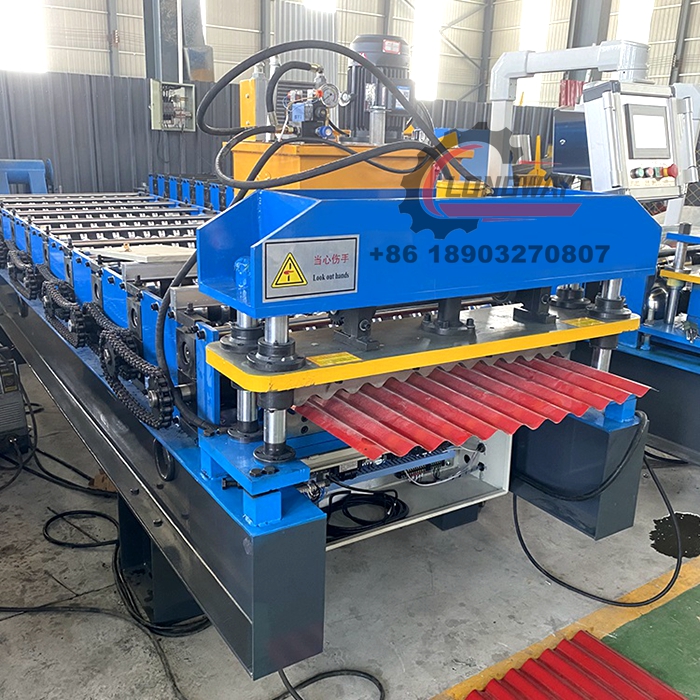
Selecting the right production equipment for trapezoidal roofing panels requires a deep understanding of both material behavior and structural requirements. The TR4, TR5, and TR6 series machines are engineered to produce high-precision metal roof panels with 4 to 6 ribs, offering a versatile solution for industrial and commercial construction. For projects requiring curved architectural elements, the TR4 model is particularly advantageous as it supports curving on the same panel, often integrated with a hydraulic curve machine for a complete package solution.
For procurement managers and engineers, evaluating the c purlin roll forming machine price involves more than just the initial cost; it requires an analysis of the machine's structural integrity, the grade of the forming rollers, and the precision of the control system. By focusing on heavy-duty H-beam structures and heat-treated solid shafts, operators can ensure long-term stability and reduce downtime in high-volume manufacturing environments.

Technical Engineering of the TR Series Trapezoidal Roof Panel Forming System
The TR series machines utilize a sophisticated separate rolling design concept. Unlike traditional continuous rolling, this approach is specifically engineered to release internal stresses from the metal sheets during the forming process. This technical nuance ensures that the final roof panel maintains a high degree of precision and a stable shape, preventing the "spring-back" effect common in lower-grade equipment.
The structural foundation of the machine is built upon 350mm H-Beam structures with a welded steel thickness of 18mm. This massive frame minimizes vibration during high-speed operation (15-20m/min), which is critical for maintaining the dimensional accuracy of the trapezoidal ribs. Furthermore, the forming shafts are constructed from 75mm solid shafts that undergo rigorous heat treatment to resist deformation under constant pressure.
- Material Specialization: Compatible with PPGI, PPGL, and GI coils with thicknesses ranging from 0.3mm to 0.6mm.
- Roller Quality: High-grade 45# forged steel rollers ensure longevity and a smooth surface finish on the panels.
- Transmission Stability: Double 1-inch chain drives provide synchronized power delivery across all 20 forming stations.

Operational Workflow and Automation Integration for High-Efficiency Output
Efficiency in metal roofing production is achieved through a streamlined linear workflow. The process begins with uncoiling, where the material is fed into the forming section. The TR series integrates a PLC Delta control system and an inverter for precise speed and length management, allowing operators to set exact cutting lengths via a touch screen interface.
The cutting mechanism employs a hydraulic pillar-type cutter, which ensures a clean, perpendicular edge without distorting the profile of the ribs. This is followed by a products receiving table that allows for safe handling and stacking of the finished panels. For customized projects, such as the Peru TR4 standard profile with a 40mm wave height, the machine can be adjusted to meet specific regional architectural standards.
By integrating the hydraulic cutting system with an automated feeding mechanism, the machine reduces manual labor and minimizes material waste. This automation is essential for large-scale industrial buildings where thousands of linear meters of roofing are required with zero margin for error in length or profile consistency.
Application Scenarios and Architectural Versatility of TR Metal Sheets
Trapezoidal roof panels produced by the TR series are prized for their classical appearance and structural grace. While they are heavily used in industrial warehouses, their aesthetic versatility makes them suitable for a wide array of commercial and residential projects. From vacation villages and hotels to outdoor exhibition centers, the clean lines of the TR4 and TR6 profiles provide both weather protection and visual appeal.
In residential family construction, the ability of the TR4 panel to be curved makes it a preferred choice for modern architectural designs that move away from traditional flat roofs. When combined with the hydraulic curve machine, the production capability expands to include arched roofs and curved wall cladding, providing architects with more creative freedom without sacrificing the durability of the steel substrate.
The wide range of compatible materials, including pre-painted galvanized steel (PPGI), allows these panels to be produced in various colors and coatings, ensuring they meet both the environmental demands of the site—such as corrosion resistance in coastal areas—and the aesthetic requirements of the client.
Technical Specifications and Performance Parameters
| Technical Parameter | Specification Detail | Performance Metric | Operational Requirement |
|---|---|---|---|
| Material Range | PPGI, PPGL, GI | Thickness 0.3-0.6mm | Coil Width 1220mm |
| Power System | 380V / 3Ph / 50Hz | Main Motor 5.5kW | Cutter Power 4kW |
| Production Speed | 15-20m/min | 20 Forming Stations | PLC Delta Control |
| Structural Build | 350mm H-Beam | 18mm Plate Thickness | 45# Forged Steel Rollers |
| Physical Dimensions | 8.8m x 1.5m x 1.2m | Total Weight Approx 5.6T | Hydraulic Pillar Cutting |
Procurement Considerations for Roll Forming Equipment Investment
When evaluating the investment for a new production line, buyers often focus on the upfront cost. However, a professional procurement strategy should prioritize the total cost of ownership (TCO). This includes the quality of the forming rollers and the durability of the frame. Rollers made from 45# forged steel with heat treatment significantly reduce the frequency of replacements compared to standard carbon steel rollers.
Another critical factor is the after-sales infrastructure. Equipment of this scale requires precise installation and operator training to reach maximum efficiency. Choosing a partner that provides lifetime after-sales service and a comprehensive warranty ensures that the production line remains operational throughout its lifecycle, mitigating the risk of prolonged downtime due to technical malfunctions.
Customization is also a key value driver. Whether it is adjusting the rib height to 40mm for specific regional standards or modifying the voltage to meet local electrical grids, the ability of the manufacturer to provide tailored engineering solutions can mean the difference between a machine that merely works and one that optimizes the entire production workflow.
Future Trends in Metal Roofing Manufacturing and Quality Standards
The metal roofing industry is moving toward higher precision and greater material efficiency. We are seeing an increased demand for "smart" roll forming lines that integrate IoT monitoring to track production yields and machine health in real-time. The transition toward more complex profiles and higher-strength alloys requires machines with more robust frames and more precise control systems, such as the Delta PLC integration found in the TR series.
Environmental sustainability is also driving a shift toward materials with longer lifespans and better recyclability. The ability to process various coatings (PPGL/PPGI) without scratching the surface is becoming a primary quality benchmark. This is where the separate rolling design proves its worth, as it reduces the mechanical stress on the material, preserving the integrity of the protective coating.
For businesses looking to scale, the focus is shifting from single-machine ownership to integrated package solutions. The combination of a roll forming machine, a hydraulic curve machine, and a slitting line allows a factory to handle the entire process from raw coil to finished architectural component, significantly increasing the value proposition offered to the end customer.
Frequently Asked Questions about TR Series Roofing Machines
What is the main difference between TR4, TR5, and TR6 panels?
The primary difference lies in the number of ribs (waves) on the panel. TR4 has 4 ribs, TR5 has 5, and TR6 has 6. The number of ribs affects the structural strength, the visual appearance, and the specific application suitability of the roof panel.
Can the TR4 machine produce curved roofing panels?
Yes, the TR4 profile is designed to allow curving on the same panel. To achieve this, we offer a package solution that includes the TR4 roll forming machine and a dedicated Hydraulic curve machine.
What materials are compatible with these roll forming machines?
The machines are designed to process PPGI (Pre-painted Galvanized Iron), PPGL (Pre-painted Galvalume), and GI (Galvanized Iron) coils, with a thickness range of 0.3mm to 0.6mm.
How does the "separate rolling design" benefit the final product?
Separate rolling helps release the internal stress of the metal sheets during formation. This prevents the panels from warping and ensures high precision and better shape retention after the panels leave the machine.
What should I consider when evaluating the c purlin roll forming machine price?
You should look beyond the initial cost and evaluate the frame thickness (e.g., 18mm welded steel), the quality of the rollers (e.g., 45# forged steel), the control system (PLC Delta), and the available after-sales warranty and training services.
Is customization available for different profile sizes?
Yes, while we provide standard profiles (such as the Peru TR4 standard), we can customize the machine's rollers and configuration to meet your specific profile drawings and size requirements.
Technical References and Industry Resources
- ASTM International - Steel Roofing Standards
- ISO Standards for Metal Forming Machinery
- World Steel Association - Material Processing Guides
- American Institute of Steel Construction
Investing in high-precision roll forming technology is a strategic move for any metal processing business aiming for quality and efficiency. Whether you are upgrading your current facility or starting a new production line, focusing on structural durability and automation will ensure a competitive edge in the industrial roofing market.
Related Technical Guides and Product News