High Precision TR Series Roof Sheet Machine Price and Guide
Investing in a high-performance TR4, TR5, or TR6 metal roofing panel roll forming machine requires a balance between initial capital expenditure and long-term operational efficiency. For industrial building contractors and metal processors, the ability to produce trapezoidal roof panels with precision—specifically those with 4 to 6 ribs—is critical for structural integrity and weatherproofing. These machines are engineered to transform coils of PPGI, PPGL, or GI into durable roofing sheets, with the TR4 profile being particularly valued for its versatility in creating curved panels for architectural accents.
When analyzing the roof sheet machine price, buyers must look beyond the sticker cost and evaluate the technical specifications, such as the separate rolling design which releases internal stress from the sheets to ensure high precision. From the selection of 45# forged steel rollers to the integration of Delta PLC control systems, every component affects the total cost of ownership and the final product quality. Understanding these engineering nuances allows procurement managers to secure equipment that maximizes throughput while minimizing material waste.

Technical Engineering of Trapezoidal Profile Forming Systems
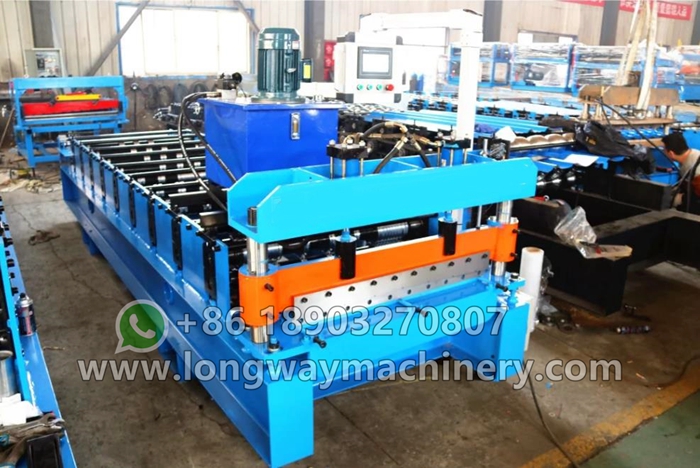
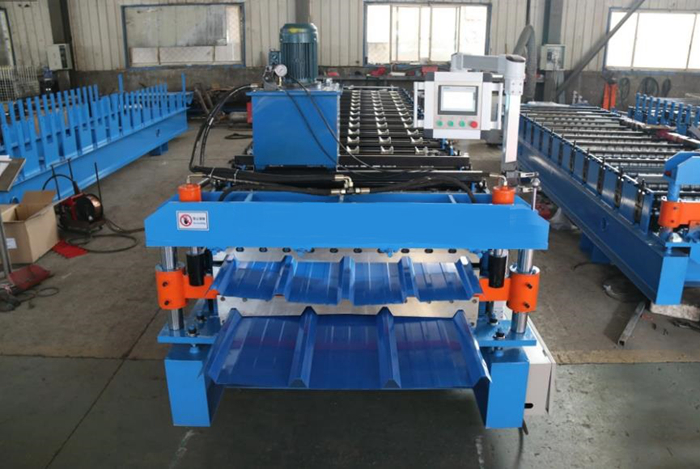
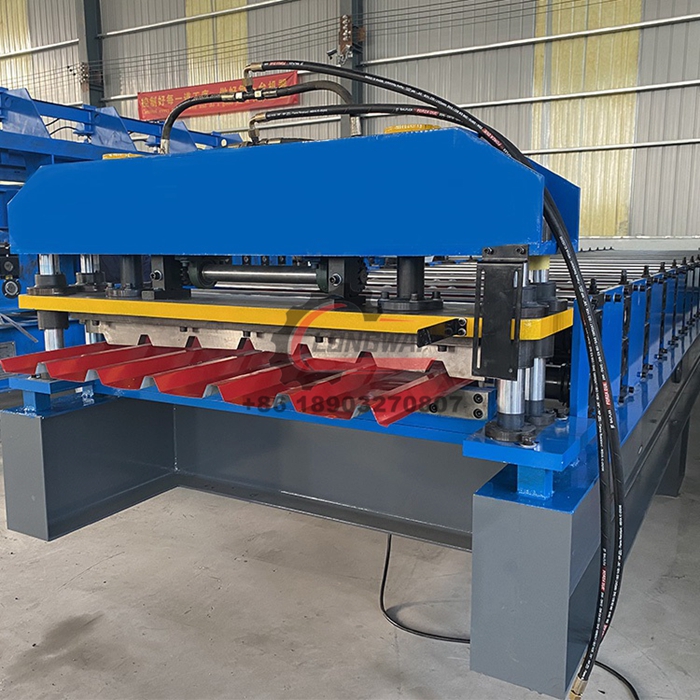
The TR series roll forming machines are designed to handle a wide range of raw materials, typically focusing on coil widths of 1220mm and thickness ranges between 0.3mm and 0.6mm (30-22 Gauge). The core of the machine's precision lies in its 20 rows of forming stations. By utilizing a separate rolling design concept, the equipment effectively releases internal stress from the metal sheets during the forming process. This ensures that the final trapezoidal panel maintains a consistent shape without warping, which is essential for seamless installation on large-scale industrial roofs.
Structurally, the machine is built upon a 350mm H-beam structure with a welded steel thickness of 18mm, providing the necessary rigidity to prevent deflection under high production speeds of 15-20m/min. The forming shaft is constructed from 75mm solid steel that has undergone specialized heat treatment to resist wear and deformation. Driven by a 5.5kw main motor and a double 1-inch chain transmission system, the machine ensures synchronized movement across all rollers, resulting in high-dimensional accuracy for every rib produced.

Operational Workflow and Hydraulic Integration
Efficiency in metal roofing production is achieved through a streamlined, linear workflow. The process begins with the uncoiling stage, where raw PPGI or GI coils are fed into the machine. As the material passes through the forming stations, the trapezoidal profile is gradually shaped. The integration of a Delta PLC and inverter system allows operators to precisely control the forming speed and length, ensuring that each panel meets the exact project specifications without manual interference.
A critical phase of the operation is the hydraulic pillar-type cutting system. Powered by a 4kw cutter motor, this system provides clean, perpendicular cuts that eliminate the need for secondary trimming. For projects requiring curved roofing, such as vacation villages or architectural exhibition halls, a package solution including a hydraulic curve machine is available. This allows the TR4 profile to be bent to specific radii, combining the structural strength of trapezoidal ribs with the aesthetic grace required for modern outdoor decorating and family construction projects.
Application Scenarios for TR4, TR5, and TR6 Panels
Trapezoidal roof panels are the industry standard for a wide array of construction environments due to their superior drainage capabilities and structural rigidity. The TR4 profile, characterized by its four waves and a wave height of 40mm (based on Peru standard drawings), is extensively used in industrial warehouses and factories. Its ability to be curved makes it a primary choice for hotel extensions and curved-roof exhibition centers where a classical appearance is desired.
Beyond industrial use, these panels are increasingly adopted in residential and commercial hospitality sectors. In vacation villages and family home constructions, the aesthetic appeal of the trapezoidal rib—combined with the corrosion resistance of PPGL coatings—provides a long-lasting solution that requires minimal maintenance. Whether used for primary roofing or as exterior wall cladding, the panels produced by these machines offer a professional finish that enhances the overall architectural value of the building.
Technical Specifications and Material Compatibility
| Parameter | Standard Specification | Material Compatibility | Performance Metric |
|---|---|---|---|
| Raw Material | PPGI, PPGL, GI | Coil Width 1220mm | Thickness 0.3-0.6mm |
| Forming System | 20 Rows Stations | 45# Forged Steel | Separate Rolling Design |
| Drive System | 5.5kw Main Motor | Double Chain Drive | Speed 15-20m/min |
| Control Unit | Delta PLC/Inverter | Touch Screen Interface | Hydraulic Pillar Cutting |
| Structure | 350mm H-Beam | 18mm Welded Steel | 75mm Heat-Treated Shaft |
Procurement Strategy for Roll Forming Equipment
When evaluating suppliers for metal forming machinery, procurement managers should prioritize manufacturers who provide end-to-end solutions. A reliable partnership extends beyond the delivery of the machine; it includes professional design, installation, and comprehensive training. For many North American and European clients, the availability of lifetime after-sales service and a multi-year warranty is a decisive factor in reducing the risks associated with large-scale equipment investment.
Furthermore, the ability to customize profiles is essential. While standard Peru TR4 profiles are common, specific regional requirements often dictate different wave heights or rib counts. A supplier capable of customizing the forming rollers and the PLC logic to match local standards ensures that the produced panels are fully compatible with existing building accessories and flashing. This flexibility prevents costly errors in the field and ensures that the machinery remains viable as local construction codes evolve.
Long-term Value and ROI in Metal Roofing Production
The return on investment for a TR series roll forming machine is realized through the reduction of outsourced panel costs and the increase in production agility. By producing panels on-site or in-house, companies can significantly reduce lead times and transportation costs associated with oversized roofing materials. The high precision of the separate rolling process also minimizes scrap rates, directly improving the bottom line by maximizing the utility of every coil of steel.
Looking forward, the trend in metal roofing is moving toward integrated automation. The transition from manual length settings to fully automated PLC-driven cutting allows for higher throughput with fewer operators. For enterprises expanding into South American or European markets, investing in machinery that complies with international quality standards is not just about current production, but about establishing a reputation for quality that allows them to compete for high-value government and commercial contracts.
Frequently Asked Questions About Trapezoidal Roof Forming
What is the difference between TR4, TR5, and TR6 profiles?
The primary difference lies in the number of ribs (waves) on the panel. TR4 features 4 ribs, TR5 has 5, and TR6 has 6. The number of ribs affects the structural load-bearing capacity and the visual appearance of the roof, with TR4 often being preferred for its versatility and ability to be curved.
Can this machine produce curved roof panels?
Yes, specifically for the TR4 profile, we offer a package solution that includes both the roll forming machine and a hydraulic curve machine, allowing the production of curved panels for architectural and decorative applications.
What materials are compatible with the TR series machines?
The machines are designed to process PPGI (Pre-painted Galvanized Steel), PPGL (Pre-painted Galvalume Steel), and GI (Galvanized Steel) coils with a width of 1220mm and thickness ranging from 0.3mm to 0.6mm.
How does the separate rolling design benefit the final product?
The separate rolling design is engineered to release internal stress from the metal sheets as they are formed. This prevents the panels from twisting or bowing, ensuring high precision and a better fit during installation.
What control system is used for length and speed adjustment?
Our machines utilize a Delta PLC and Delta Inverter system with a touch screen interface, allowing for precise, automated control over the forming speed and the exact length of the cut panels.
Is customization available for different profile sizes?
Yes, while we provide standard profiles like the Peru TR4, we can customize the machine's forming rollers and specifications according to your specific drawing or regional standards.
Technical References and Industry Standards
- ASTM International - Steel Roofing Standards
- ISO Standards for Metal Forming Machinery
- World Steel Association - Material Specifications
- American Institute of Steel Construction
Finding the right balance in roof sheet machine price involves weighing technical precision against long-term durability. Whether you are scaling an industrial production line or starting a local roofing business, ensuring your equipment uses high-grade forged steel and reliable PLC controls is the best way to guarantee consistent quality and operational longevity.
Related Equipment and Technical Solutions