High Precision TR Series Roof Making Machine Price and Guide
Investing in professional metal forming equipment requires a balance between technical precision and long-term operational costs. For contractors and industrial builders, the TR4, TR5, and TR6 series of trapezoidal roof panel machines represent a critical intersection of versatility and efficiency. These machines are specifically engineered to produce high-strength roofing sheets with 4 to 6 ribs, ensuring optimal drainage and structural integrity for diverse architectural requirements. Whether you are focusing on industrial warehouses or residential developments, understanding the technical nuances of roll forming—from material gauge compatibility to hydraulic cutting precision—is essential for maximizing your return on investment and ensuring a seamless production workflow.

Technical Architecture and Roll Forming Mechanics of the TR Series
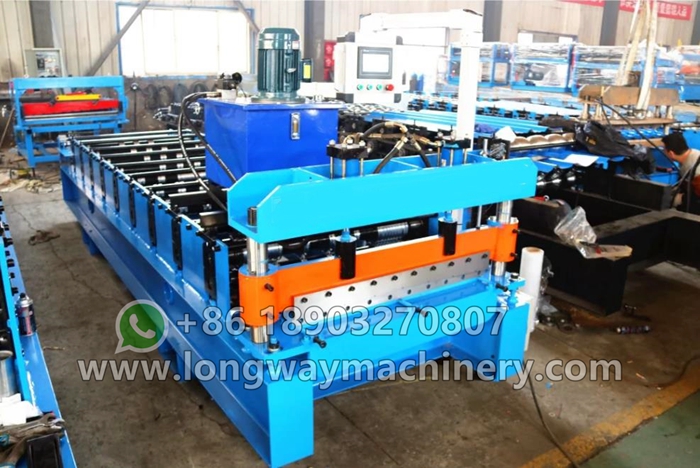
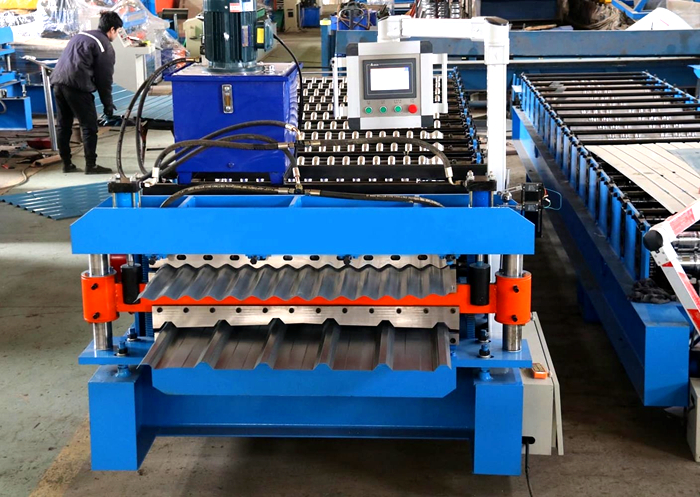
The TR series machines utilize a separate rolling design concept, which is fundamental to maintaining the geometric precision of the roof panels. Unlike continuous rolling, this approach effectively releases internal stress from the sheets during the forming process. This results in a final product that is not only high in precision but also free from the warping common in lower-grade machinery. The structure is built upon a 350mm H-beam frame with 18mm welded steel plates, providing the necessary rigidity to handle high-tension forming without deflection.
At the core of the operation is a 75mm solid shaft that has undergone rigorous heat treatment, paired with rollers crafted from high-grade 45# forged steel. With 20 rows of forming stations, the machine gradually shapes the PPGI, PPGL, or GI coils into a precise trapezoidal profile. The transmission is handled by a robust 1-inch double chain drive, ensuring synchronized movement and consistent forming speeds between 15 to 20 meters per minute, which optimizes throughput for large-scale projects.

Operational Workflow and Hydraulic Integration for Precision Cutting
The production cycle follows a streamlined linear path: Uncoiling → Feeding → Roll forming → Hydraulic cutting → Receiving. This sequence is managed by a high-performance Delta PLC and inverter system, accessible via a user-friendly touch screen. The integration of PLC control allows operators to set precise lengths for each panel, minimizing material waste and ensuring that every cut is accurate to the millimeter.
A standout feature of the TR4 model is its compatibility with hydraulic curve machines. This allows for the production of arched or curved roof panels on the same production line, expanding the architectural possibilities for industrial buildings. The hydraulic pillar-type cutter, powered by a 4kw motor, provides a clean, perpendicular shear that eliminates the need for secondary trimming, significantly reducing labor costs on the job site.
Application Scenarios and Material Compatibility for Modern Construction
TR series metal sheets are highly valued for their classical appearance and structural grace, making them suitable for a wide range of applications beyond basic industrial sheds. They are frequently deployed in vacation villages, luxury hotels, exhibition centers, and high-end family constructions. The ability to customize the wave height (such as the Peru TR4 standard of 40mm) ensures that the equipment can meet regional building codes and aesthetic preferences across different global markets.
In terms of materials, the machine is optimized for a thickness range of 0.3mm to 0.6mm (30-22 Gauge). By supporting various coatings like PPGI and PPGL, the resulting panels offer superior corrosion resistance and color longevity. For procurement managers, selecting a machine that supports this breadth of material allows for greater flexibility in sourcing coils and responding to specific client demands for different environmental conditions.
Technical Specification Matrix for TR Series Equipment
| Technical Parameter | Specification Detail | Performance Impact | Material Standard |
|---|---|---|---|
| Main Motor Power | 5.5kw / 380v | Consistent torque for forming | Industrial Grade |
| Forming Speed | 15-20m/min | High-volume output capacity | Standard Production |
| Roller Material | 45# Forged Steel | Extended wear life/durability | Heat Treated |
| Control System | Delta PLC & Inverter | Precision length & speed control | Digital Automation |
| Frame Structure | 350mm H-Beam | Eliminates machine vibration | 18mm Welded Steel |
Evaluating Equipment Quality and Long-term Supplier Reliability
When assessing the value of a roll forming line, buyers must look beyond the initial roof making machine price and analyze the total cost of ownership. Key indicators of quality include the grade of steel used in the forming shaft and the design of the transmission system. A double-chain drive, for instance, offers significantly more stability and a longer service life than single-chain alternatives, reducing unplanned downtime in a high-pressure production environment.
Partnering with a manufacturer like Longway, who brings 12 years of R&D experience and a footprint in over 40 countries, provides an additional layer of security. The availability of a 2-year warranty and lifetime after-sales service ensures that the equipment remains operational. For international buyers, specifically in South America and Europe, the ability to receive free training and installation support is critical for ensuring the machine is calibrated correctly to local material standards.
Future Trends in Metal Roofing and Procurement Strategies
The industry is moving toward higher automation and the integration of smarter materials. We are seeing an increased demand for panels that combine thermal insulation with structural roofing, which puts more pressure on the roll forming process to maintain precision without damaging integrated coatings. Consequently, machines that offer separate rolling designs are becoming the standard, as they ensure the highest precision for these complex materials.
For businesses looking to expand their capacity, a modular procurement strategy is recommended. Starting with a TR4 base and adding a hydraulic curve machine allows a company to enter the specialized curved roofing market without a massive initial capital outlay. By focusing on customized specifications—such as adjusting wave heights or adding specific embossing patterns—manufacturers can differentiate their final product in a crowded marketplace.
Common Inquiries Regarding TR Series Roll Forming Machinery
What is the primary difference between the TR4 and TR6 profiles?
The primary difference lies in the number of ribs (waves) on the panel. TR4 produces panels with 4 ribs, while TR6 produces 6. The TR4 is particularly popular for industrial buildings because it is more easily adapted for curved roof applications using a hydraulic curve machine.
Can this machine handle different material thicknesses?
Yes, the TR series is designed to work with a thickness range of 0.3mm to 0.6mm (30-22 Gauge). It is compatible with common materials including PPGI, PPGL, and galvanized steel (GI).
How is the cutting length determined and controlled?
The length is set via the Delta PLC touch screen. The system uses an encoder to measure the material feed and triggers the hydraulic pillar cutter at the exact programmed length, ensuring high consistency across all produced panels.
What maintenance is required for the forming rollers?
The rollers are made of 45# forged steel with heat treatment to minimize wear. Routine maintenance involves lubricating the transmission chain and checking the alignment of the rollers to ensure the profile remains precise over time.
Is customization available for non-standard profile drawings?
Yes, while we offer standard profiles like the Peru TR4 (40mm wave height), we can customize the machine's rollers and shaft configuration to match your specific profile drawings and regional requirements.
What after-sales support is provided for international installations?
Longway provides a 2-year free warranty, free technical training, and lifetime after-sales service to help customers from North America, South America, and Europe optimize their production.
Technical Industry References
- ISO Standards for Cold-Rolled Steel Products
- ASTM International Material Specifications for Metal Roofing
- World Steel Association - Global Production Trends
- American Institute of Steel Construction - Design Guides
Choosing the right roll forming equipment is a decision that impacts your production capacity for years. By focusing on structural rigidity, PLC precision, and supplier expertise, you can ensure a high-quality output that meets the strictest architectural standards.
Recommended Technical Guides